

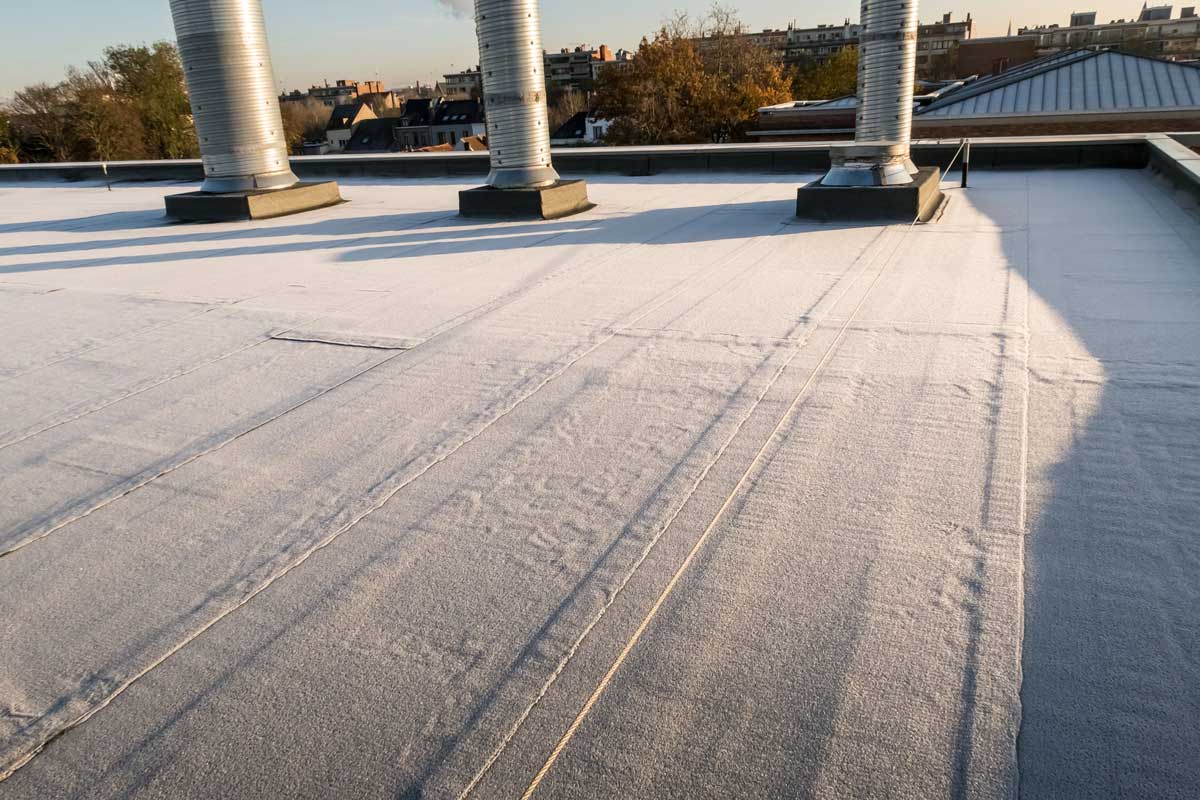
Flat roofs are a smart, modern roofing choice for many commercial buildings and contemporary homes throughout the Midwest. But in regions like Minnesota and Wisconsin, where snow loads, ice dams, temperature swings, and heavy storms are part of everyday life, flat roof maintenance isn’t optional. It’s essential.
Without a proactive maintenance strategy, even a well-installed flat roof can develop moisture issues, membrane damage, or insulation failure over time. This guide serves as a year-round maintenance roadmap for flat roofs in harsh climates, helping property owners protect their investment, extend roof lifespan, and reduce the risk of costly repairs.
Why Flat Roofs Require Extra Care in Harsh Climates
Unlike steep-slope roofs that naturally shed water and snow, flat roofs rely on proper drainage systems, intact membranes, and consistent upkeep to perform correctly. In colder climates, that margin for error is much smaller.
Key environmental stressors include:
- Freeze-thaw cycles that cause materials to expand and contract
- Heavy snow accumulation that increases the structural load
- Ice dams that trap melting snow and force water beneath the membrane
- Wind-driven rain and hail that can compromise seams and flashing
Understanding how flat roofs perform in this environment is critical. If you’re new to flat roofing or weighing your options, check out our complete guide to flat roofs in Minnesota and Wisconsin.
Year-Round Flat Roof Maintenance: What to Focus On
The most effective flat roof maintenance plan doesn’t rely on one inspection or one season; it’s continuous and preventative.
1. Prioritize Drainage and Water Flow
Standing water is one of the most common causes of flat roof failure. Even minor pooling can accelerate membrane breakdown and increase the risk of leaks.
Maintenance best practices include:
- Keeping roof drains, scuppers, and gutters clear of debris
- Checking slope consistency to ensure proper water flow
- Monitoring for signs of ponding after heavy rain or snowmelt
Poor drainage during winter can quickly turn into ice buildup, increasing the likelihood of ice dams and membrane stress.
2. Protect Against Moisture Intrusion
Moisture is the biggest long-term threat to flat roofs in cold climates. Water that enters the roofing system can freeze, expand, and cause hidden damage long before interior leaks appear.
Key areas to inspect:
- Seams and membrane joints
- Flashing around HVAC units, vents, and skylights
- Penetrations where sealants may be aging or cracked
Catching early signs of moisture intrusion is far easier and far less expensive than dealing with saturated insulation or structural repairs later.
Seasonal Maintenance Strategies for Flat Roofs
Each season presents unique challenges for flat roof systems. Addressing them proactively helps avoid emergency repairs.
Fall: Prepare Before Winter Arrives
Autumn is the most important maintenance window of the year. Before freezing temperatures hit:
- Schedule a professional inspection
- Remove leaves and debris that block drainage
- Repair minor membrane issues before they worsen in winter
Review our guide to preparing flat roofs for Minnesota winters for more details on winter-prep steps.
Winter: Monitor Snow, Ice, and Ice Dams
Winter maintenance focuses on observation and risk management rather than major repairs.
Key concerns include:
- Ice dams forming near edges or drains
- Excessive snow load stressing the roof structure
- Interior signs of leaks caused by melting snow refreezing
Ice dams are particularly dangerous on flat roofs because they prevent proper drainage and force water back into vulnerable areas. If conditions seem off, it’s important to act early rather than wait for visible damage.
Spring: Inspect After Snowmelt
Once the snow and ice clear, spring inspections help identify damage that occurred over winter. Spring maintenance should include:
- Checking for membrane splits or blistering
- Inspecting flashing and sealants affected by freeze-thaw cycles
- Confirming insulation hasn’t been compromised by moisture
This is also the best time to address small issues before spring storms arrive.
Summer: Maintain and Reinforce
Summer offers ideal conditions for repairs, coatings, and preventative upgrades.
Recommended summer actions:
- Reinforce weak areas identified in spring
- Apply protective coatings where appropriate
- Review overall roof performance before the next cold season
Consistent summer maintenance often prevents the need for emergency storm restoration later in the year.
Spotting Early Warning Signs Before Damage Escalates
Flat roof problems rarely appear overnight. In most cases, warning signs show up long before major failure occurs. A few warning signs to watch for:
- Interior ceiling stains or bubbling
- Musty odors can indicate trapped moisture
- Cracks, wrinkles, or exposed seams on the membrane
- Slow drainage or recurring ponding
Addressing these signs early can mean the difference between routine maintenance and full storm restoration. Learn more about spotting early warning signs of flat roof damage.
When Storm Restoration Becomes Necessary
Even with proper maintenance, severe weather can overwhelm a flat roof system. Hail, high winds, and heavy snowstorms can all cause sudden damage. After a major storm check the following:
- Inspect the roof as soon as it’s safe
- Document visible damage
- Avoid temporary fixes that could worsen underlying issues
Storm restoration is most effective when combined with a long-term maintenance strategy rather than treated as a standalone repair.
The Value of a Professional Flat Roof Maintenance Plan
DIY checks are helpful, but professional inspections catch issues most property owners miss. A structured maintenance plan helps:
- Extend the life of your flat roof
- Reduce unexpected repair costs
- Maintain warranty compliance
- Improve long-term building protection
In harsh Midwest climates, proactive care is the most cost-effective roofing decision you can make. Whether you’re managing an aging roof, planning preventative care, or concerned about ice dams, moisture, or storm damage, we can help you protect your investment. Contact us to schedule a professional flat roof maintenance consultation and get expert guidance designed specifically for Midwest weather challenges.


