

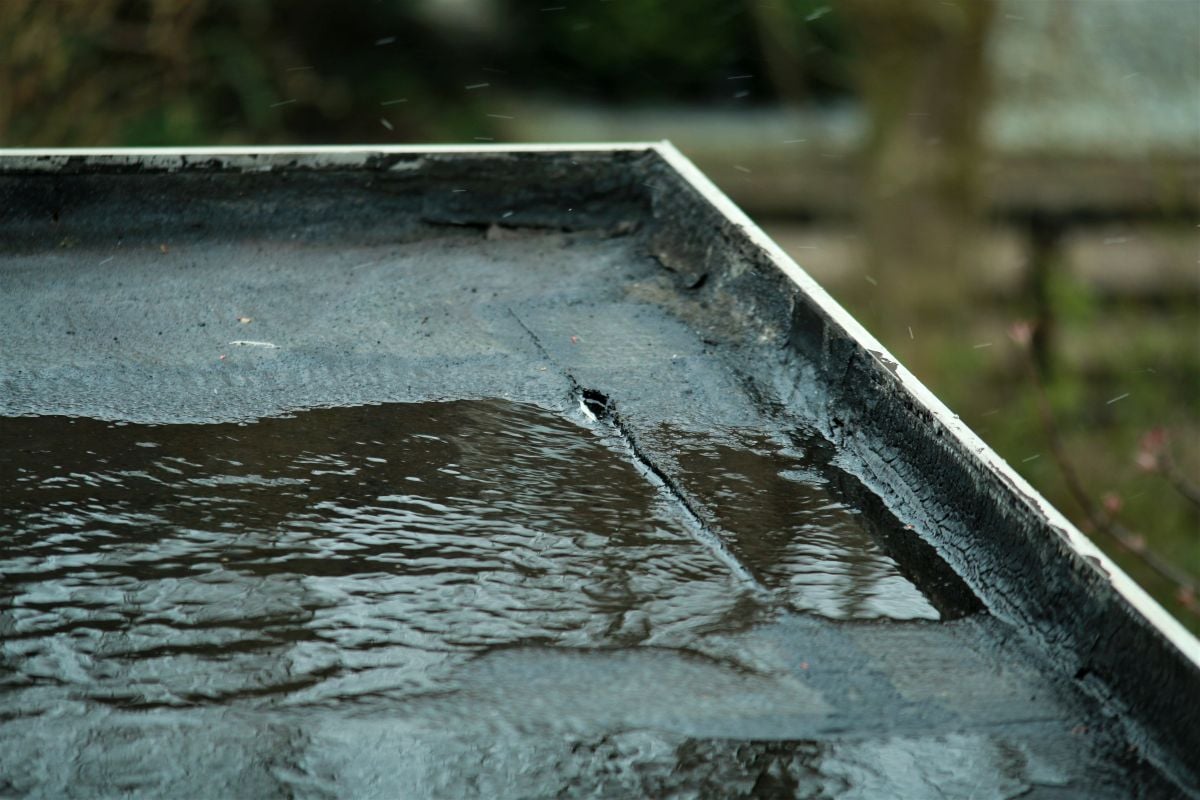
A flat roof leak is one of the most common and costly problems commercial property owners face, and catching the warning signs early can save thousands of dollars in repairs and interior damage. Flat and low-slope roofs are especially vulnerable to leaks because water has fewer paths to drain away, which means even minor issues can lead to major problems over time. This guide walks through the most common flat roof leak causes, seven warning signs every property owner should know, and the repair solutions that protect your building long-term.
- Early detection: Spotting flat roof leak signs early prevents expensive interior damage.
- Common causes: Most flat roof leaks come from a small set of predictable problem areas.
- Repair options: The right repair depends on the cause, location, and severity of the leak.
Why Flat Roof Leaks Are So Common
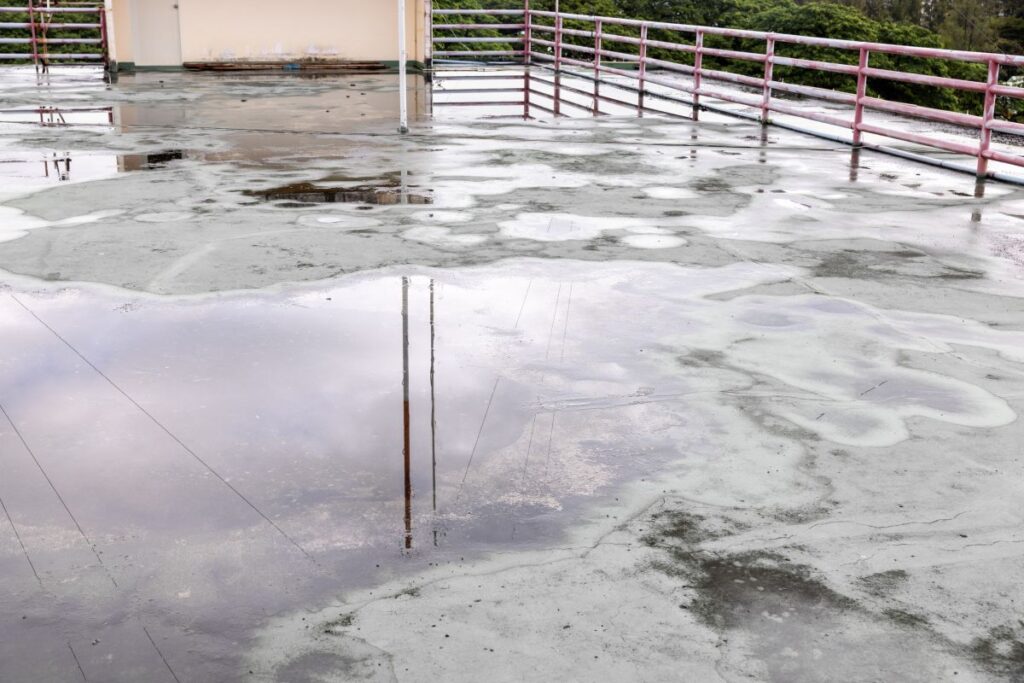
Flat and low-slope commercial roofs are designed to handle standing water for short periods, but they are not built to hold it indefinitely. Inadequate drainage is a key reason water ponds on these roofs, and that pooling, combined with exposed surface area and frequent rooftop activity, can lead to leaks over time more often than on steep-slope systems.
The Challenge of Drainage on Flat Roofs
Drainage is the single biggest factor that makes flat roofs more vulnerable to leaks than sloped roofs. Water moves slowly across a flat surface, increasing the risk of water pooling and giving it more time to find weak spots, clogged drains, or damaged seams. Ponding water can soften the membrane, accelerate wear, and lead to long-term moisture infiltration, so managing drainage helps prevent leaks. Understanding the role of drainage is the first step in preventing flat roof leaks and protecting your commercial property.
- Ponding water: Standing water shortens membrane lifespan and increases leak risk.
- Slow runoff: Flat slopes give water more time to find vulnerabilities.
- Clogged drains: Blocked drains and scuppers cause water to back up onto the roof.
High Exposure to Wear and Damage
Flat roofs experience more rooftop activity than most other commercial roof types. HVAC units, plumbing vents, exhaust fans, and other equipment require ongoing maintenance, which means crews regularly walk on the membrane. This foot traffic, combined with a membrane that is constantly exposed to environmental conditions and aging materials, creates many opportunities for damage. Heavy UV exposure, aging, and extreme freeze-thaw swings can crack, split, or blister the membrane over time. Every flat roof leak prevention plan should include strategies for controlling foot traffic and protecting the membrane.
- Foot traffic damage: Repeated walking wears down the membrane over time.
- Equipment penetrations: HVAC units and vents create leak-prone points.
- UV and weather exposure: Sun, wind, hail, and snow all accelerate wear.
7 Signs of a Flat Roof Leak Every Owner Should Know
The earlier you catch a flat roof leak, the easier and less expensive it is to repair. The following seven warning signs are the most common indicators of a leak in a commercial flat roofing system.
1. Water Stains on Interior Ceilings
Water stains are often the first visible sign of a flat roof leak inside a commercial building. These stains typically appear as yellow, brown, or rust-colored patches on ceiling tiles, drywall, or other interior surfaces. Even small stains, bubbling paint, or mold growth on ceilings or walls should be taken seriously because they often indicate ongoing moisture intrusion that can lead to water damage over time. Water can travel up to 20 feet horizontally between the roof membrane and the interior ceiling, which makes leak detection harder. Acting quickly when stains appear can prevent further damage to insulation, drywall, and electrical systems.
- Yellow or brown spots: Discoloration usually points to water moving through the roof system.
- Growing stains: Expanding stains indicate an active and worsening leak.
- Recurring stains: Stains that reappear after painting signal an unresolved roof problem.
2. Ponding Water on the Roof Surface
Ponding water is one of the most reliable indicators that a flat roof leak is developing or about to develop on the roof’s surface. Water that remains on the roof for more than 48 hours after rain can indicate drainage trouble and recurring heavy rain exposure, putting ongoing stress on the membrane and accelerating wear. Over time, ponding water can soften adhesives, separate seams, and create soft spots in the roofing system. Identifying and addressing ponding areas is one of the most effective flat roof leak prevention strategies.
- Standing water: Water that lingers past 48 hours is a major warning sign.
- Soft spots: Areas where the membrane feels spongy indicate trapped moisture.
- Repeated ponding: Recurring puddles in the same location signal a drainage issue.
3. Damaged or Lifted Seams
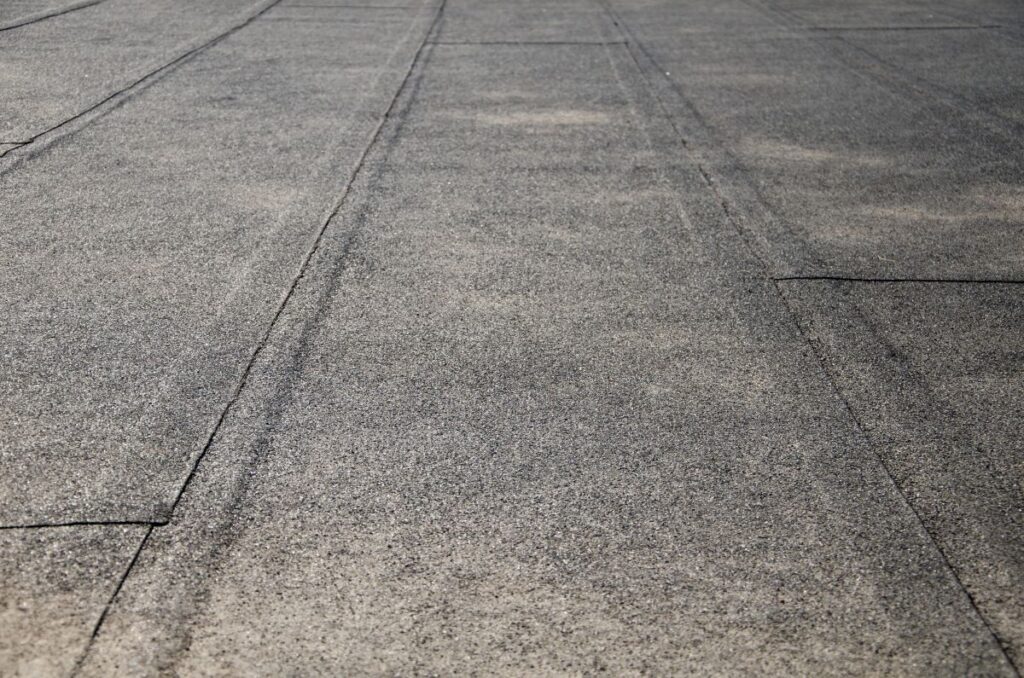
Seams are the weakest point on most flat roofing systems, especially single-ply membranes like TPO, EPDM, and PVC. When seams begin to lift, separate, or crack, water can easily find its way into the roofing system and cause hidden damage below. Damaged seams are often visible during a roof inspection but can also be detected by water stains directly below seam locations. Prompt seam repairs are one of the most effective flat roof leak solutions.
- Lifted seams: Edges that have separated from the membrane allow water entry.
- Cracked seams: Aging adhesives can crack and create leak pathways.
- Visible gaps: Open seams indicate immediate repair is needed.
4. Blisters, Bubbles, or Soft Spots
Blisters and bubbles on a flat roof surface can form after temperature fluctuations stress the membrane, leaving trapped moisture or air beneath it. While not every blister leads to a leak, they often indicate that the bond between the membrane and the underlying layers has failed due to moisture, poor adhesion, or thermal expansion. Over time, these weak spots become more likely to crack, tear, or develop active leaks. Identifying blisters during an inspection allows your commercial roofing contractor to repair the area before a full flat roof leak develops.
- Surface blisters: Raised areas signal trapped moisture or adhesion failure.
- Soft spots underfoot: Areas that feel spongy may indicate wet insulation.
- Cracking blisters: Damaged blisters often turn into active leak points.
5. Damaged Flashing or Penetrations
Flashings and roof penetrations are some of the most common sources of flat roof leaks on commercial buildings. Every pipe, vent, and HVAC unit, along with roof edges, represents a transition point where the membrane meets another material, and these transitions need to remain watertight. Flashing at perimeter edges and intersections where the roof meets walls, chimneys, and skylights can expand, contract, rust, or peel away over time. Damaged flashing, cracked sealant, or worn boots around penetrations can all lead to leaks. Regular inspection of these areas is critical to keeping a flat roof in strong condition.
- Cracked flashing: Damaged metal or membrane flashing allows water infiltration.
- Worn pipe boots: Aging rubber boots around pipes are a frequent leak source.
- Deteriorated sealant: Old sealant around penetrations breaks down over time.
6. Rising Energy Bills
A sudden or steady increase in heating and cooling bills can be an unexpected sign of a flat roof leak. When water gets into the roofing system, it saturates the insulation and reduces its effectiveness. This forces HVAC equipment to work harder to maintain indoor temperatures, which raises energy costs. Property owners who notice unexplained increases in utility bills should consider scheduling a commercial roof inspection to check for hidden moisture.
- Higher utility costs: Wet insulation reduces overall energy efficiency.
- Uneven temperatures: Hot or cold spots may indicate insulation damage.
- HVAC overuse: Heating and cooling systems run longer to compensate.
7. Visible Membrane Damage
Visible damage to a damaged membrane is often the clearest sign of a flat roof leak risk. Tears, punctures, cracks, and worn areas all create direct pathways for water to enter the roofing system. A damaged area may result from foot traffic, debris, hail, or aging roofing material. Repairing these issues quickly is one of the most important steps in protecting a commercial flat roof from costly leaks.
- Punctures and tears: Even small holes can let in significant amounts of water.
- Cracks and splits: Aging membranes can split, especially in cold weather.
- Worn areas: High-traffic zones often show membrane thinning over time.
Common Causes of Flat Roof Leaks
Most flat roof leaks come from a predictable set of causes. Understanding these root issues helps property owners and contractors identify the right repair and prevent future problems.
Age and Wear
Aging is one of the most common causes of flat roof leaks on commercial buildings. Every commercial roofing system has a finite lifespan, and as the membrane ages, it becomes more brittle, less flexible, and more prone to cracks and tears, increasing the risk of water intrusion and eventual extensive damage. Even a well-maintained flat roof will eventually reach the end of its service life, though timely repairs on minor damage can slow deterioration and reduce the need for major work before replacement becomes necessary. Knowing the age of your roof helps you plan ahead and avoid surprise leaks.
- Brittle membranes: Older membranes lose flexibility and crack more easily.
- Adhesive breakdown: Aging adhesives can fail at seams and edges.
- End-of-life systems: Roofs near the end of their lifespan are most leak-prone.
Poor Installation and Workmanship
Installation quality has a direct impact on how often a flat roof develops leaks, and improper installation is a common reason problems start early. Poorly welded seams, incorrect flashing details, and inadequate attachment can all lead to early leaks even on otherwise high-quality commercial roofing materials. It can also complicate later warranty claims if the work or repair history is not clearly documented. This is why it is so important to choose an experienced commercial roofing contractor for any new flat roof installation or repair. Strong workmanship pays off in fewer leaks and a longer roof lifespan.
- Improper seams: Poorly welded or bonded seams are a leading cause of leaks.
- Flashing mistakes: Incorrect flashing details create leak-prone transitions.
- Attachment errors: Improperly fastened membranes can lift or shift over time.
Flat Roof Leak Repair Solutions
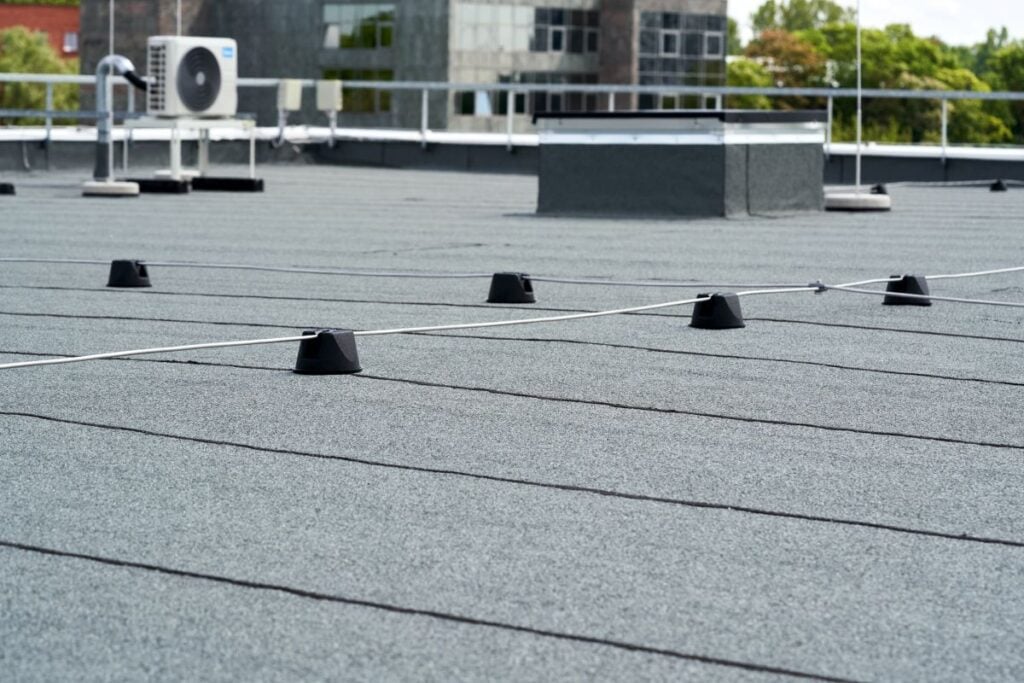
Once a flat roof leak is identified, the right repair solution depends on the cause, location, and severity of the damage. A qualified commercial roofing contractor can recommend the best approach for your specific situation.
Spot Repairs and Patching
Spot repairs and patching are the most common solutions for small to moderate flat roof leaks. These repairs typically involve cleaning the affected area, applying a compatible patch or sealant, and ensuring the surrounding membrane is in good condition. Spot repairs are effective for isolated damage, but they are not a substitute for addressing larger systemic issues. The right contractor will help you decide when patching is appropriate and when a more comprehensive repair is needed.
- Membrane patches: Compatible patches repair small punctures or tears.
- Seam repairs: Re-welded or re-bonded seams restore watertight integrity.
- Flashing repairs: Replacing damaged flashing fixes leaks at transitions.
Roof Restoration or Replacement
When flat roof leaks become widespread or the roofing system is nearing the end of its lifespan, restoration or replacement may be the better long-term solution. Roof restoration coatings can extend the life of an aging membrane, while a full replacement gives you a new system with a fresh warranty. The right choice depends on the age, condition, and remaining service life of the existing roof. A trusted commercial roofing contractor can help you evaluate the most cost-effective path forward.
- Restoration coatings: Liquid-applied coatings can extend roof lifespan.
- Full replacement: A new commercial roof resets the lifespan and warranty.
- Hybrid solutions: Some properties benefit from partial replacement and restoration.
Stop Flat Roof Leaks With Classic Construction
Flat roof leaks can cause serious damage to a commercial property if they are not identified and repaired quickly. From ponding water and lifted seams to damaged flashing and aging membranes, understanding the signs and causes of flat roof leaks helps you protect your investment and plan ahead with confidence. The right repair paired with the right contractor delivers long-term protection and peace of mind for your building.
At Classic Construction, we specialize in flat roof leak detection, repair, and replacement across Minnesota and Wisconsin. Our team brings deep experience with every major commercial roofing system, expert craftsmanship, and a proactive approach that protects your property long-term. If you suspect a flat roof leak or want a professional assessment of your commercial roof, contact Classic Construction today to schedule a free roof inspection and get a clear plan to keep your property dry and protected.


