

Selecting the right flat roofing materials is one of the most important decisions a commercial property owner can make when planning a new roof installation or replacement. The material you choose directly affects the lifespan, energy efficiency, maintenance needs, and total cost of ownership for your commercial roof. This guide walks through the most common flat roofing materials available in 2026, the factors that should shape your decision, and how to choose the right system for your building, climate, and long-term goals.
- Performance needs: Each flat roofing material performs differently in weather, foot traffic, and chemical exposure.
- Budget considerations: Material costs vary widely across flat roofing options.
- Building requirements: Roof size, use, and rooftop equipment influence which material fits best.
Why Choosing the Right Flat Roofing Material Matters
The flat roofing material you select shapes your commercial property’s performance for decades. The right choice protects your building, lowers operating costs, and reduces long-term maintenance, while the wrong choice can lead to early failure and avoidable expenses.
Long-Term Performance and Lifespan
Long-term performance is one of the biggest reasons to carefully evaluate flat roofing materials before making a final decision. Modified bitumen roofing typically lasts about 15 to 20 years, while single-ply membranes like TPO and PVC can last 30 to 40 years, and metal roofs can last 30 to 50 years. A longer-lasting material reduces how often you have to plan and budget for a full replacement, which translates into significant savings over time. Choosing the right material up front pays off across the entire lifespan of your commercial roof.
- Lifespan range: Different flat roofing materials last anywhere from 15 to 40 years.
- Weather resistance: Material choice affects how well your roof handles wind, hail, and UV.
- Wear and tear: Some materials hold up better to foot traffic and rooftop equipment.
Energy Efficiency and Operating Costs
Flat roofing materials also have a major impact on your building’s energy efficiency and ongoing operating costs. TPO and PVC are single ply membranes commonly used on flat roofs because they support strong energy performance. Reflective surfaces, insulation compatibility, and overall thermal performance vary widely across commercial roofing systems. A more energy-efficient flat roof can lower heating and cooling expenses, improve indoor comfort, and help your building meet local energy code requirements. These factors all add long-term value to your investment in the right roofing material.
- Reflective surfaces: TPO and PVC can reflect sunlight and uv rays, which helps cool the building and reduce cooling costs; this is one reason PVC roofing is a popular choice for flat roofing.
- Insulation pairing: Some flat roofing materials work better with specific insulation types.
- Code compliance: Many municipalities now require energy-efficient flat roofing systems, and reflective cool roofs may help meet stricter energy codes while potentially qualifying for utility rebates.
The Most Common Flat Roofing Materials in 2026
Several flat roofing materials dominate the commercial roofing market in 2026, each with its own strengths, weaknesses, and ideal applications. Understanding how they compare is the first step in making the right choice for your building.
TPO Roofing
Thermoplastic polyolefin, or TPO roofing, is one of the most popular flat roofing materials on the market today. This single layer membrane offers a reflective white surface that helps bounce UV rays away, lower cooling demand, strong energy efficiency, and competitive pricing that appeals to many commercial property owners. TPO roofs typically last 20 to 30 years and install quickly using heat-welded seams that create a strong, watertight bond. Installed costs typically range from $4 to $14 per square foot. This commercial roofing system is a smart choice for warehouses, office buildings, retail centers, and other flat or low-slope properties.
- Reflective surface: TPO reflects sunlight and helps lower cooling costs.
- Welded seams: Heat-welded seams create a strong, leak-resistant bond.
- Cost-effective: TPO offers a balanced mix of price and long-term performance.
EPDM Roofing
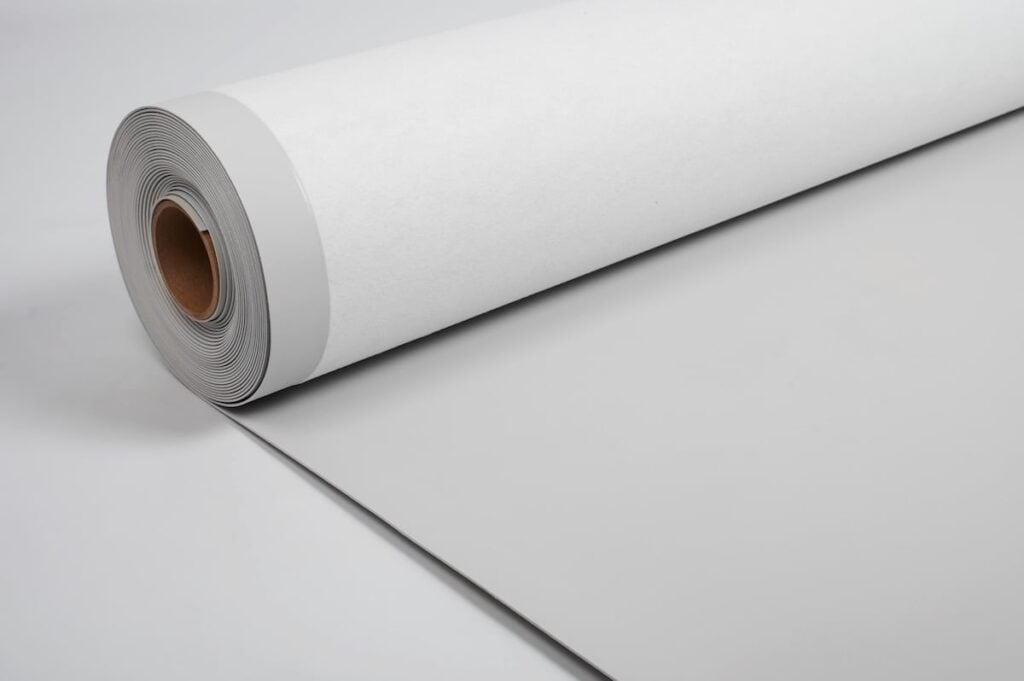
Ethylene propylene diene monomer, or EPDM rubber roofing, also known as EPDM Ethylene Propylene Diene, is another widely used flat roofing material with more than 50 years of proven performance. EPDM is known for its flexibility, weather resistance, and reliable performance in cold climates such as Minnesota and Wisconsin, and it also resists UV rays, ozone, and extreme temperature swings. This synthetic rubber membrane is available in large rolls, which reduces the number of seams and creates fewer opportunities for leaks. EPDM is a smart flat roofing material for property owners who want a durable, cost-effective option backed by decades of field history, with a lifespan of about 30+ years and among the longer-lasting single-ply options, a category that generally ranges from 15 to 50 years.
- Rubber membrane: EPDM is a proven rubber roofing material with strong field performance.
- Cold-weather strength: EPDM stays flexible in low temperatures without cracking.
- Long sheet sizes: Large rolls reduce seams and simplify installation.
PVC Roofing
Polyvinyl chloride, or PVC roofing, is a heat-welded single-ply flat roofing material known for exceptional durability and chemical resistance. PVC performs especially well on restaurants, manufacturing facilities, industrial buildings, and industrial facilities where chemical resistance matters. This flat roofing material typically lasts 20 to 30 years and offers excellent waterproofing through fully welded seams. It can be installed fully adhered or mechanically attached with mechanical fasteners, depending on project needs. PVC is a premium choice for commercial property owners who need high performance in demanding environments, including fire resistant performance and durability in extreme temperatures, though it can cost more than some other roof materials.
- Chemical resistance: PVC stands up well to grease, oils, and harsh chemicals.
- Welded seams: Fully welded seams provide excellent waterproofing.
- Durable performance: PVC delivers strong long-term performance in tough conditions.
Modified Bitumen Roofing
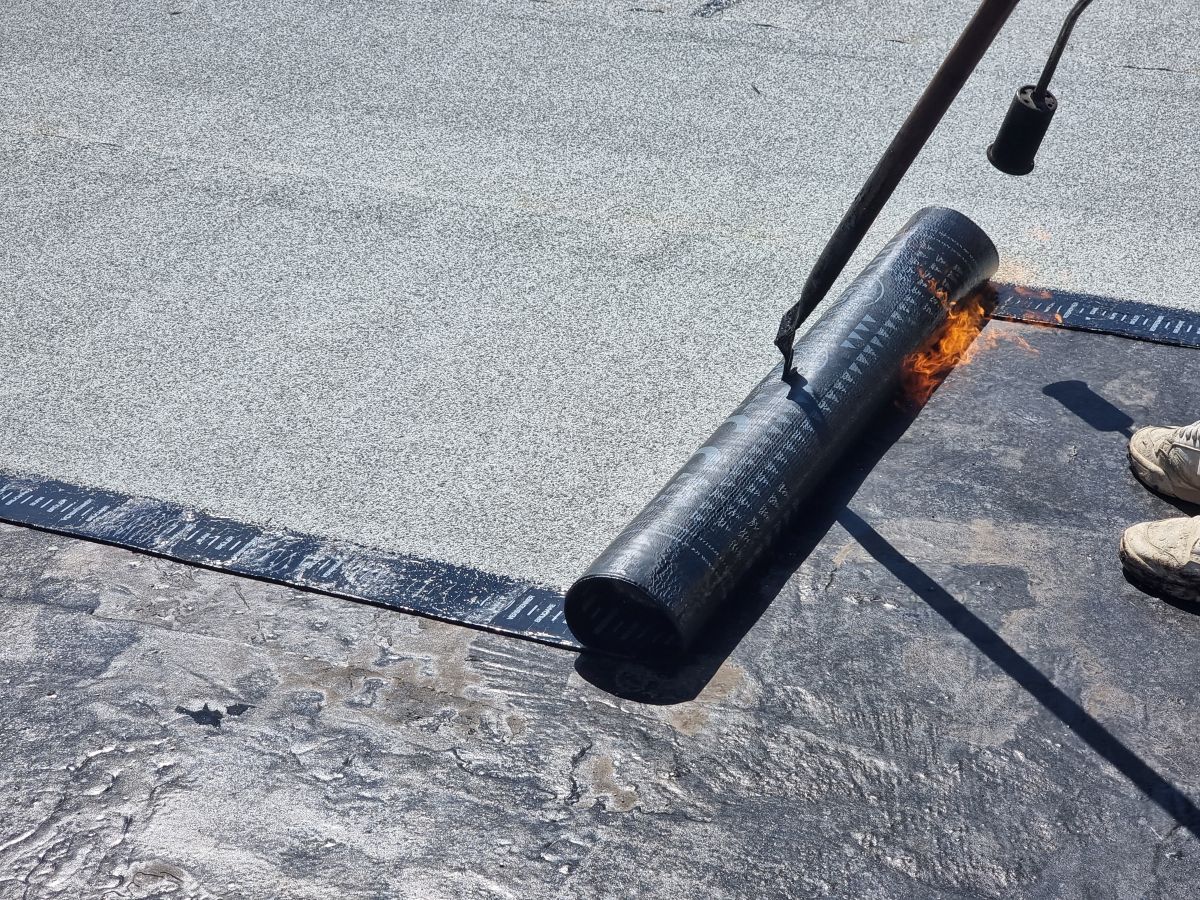
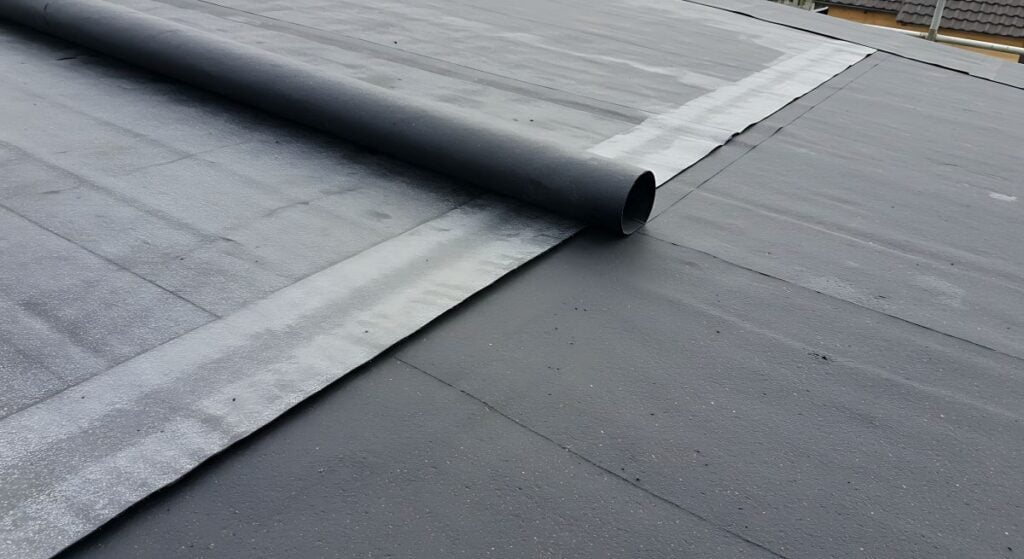
Modified bitumen is a multi-layer flat roofing material that combines asphalt with reinforcing materials to create a durable barrier against water and weather. It is a common choice for commercial buildings that need redundancy, heavy rooftop foot traffic capacity, or proven long-term performance. Modified bitumen roofs more typically last about 15 to 20 years and install in multiple layers using different installation methods, including torch-applied, self-adhered, cold-applied, or hot-mopped approaches. This flat roofing material is reliable, predictable, and well-suited to many commercial properties as a middle range option for owners who want durability without moving to premium systems.
- Multi-layer construction: Modified bitumen creates a thick, redundant barrier.
- Heavy traffic durability: This material offers good durability and resistance to punctures and tears, and it holds up well to rooftop foot traffic.
- Proven performance: Modified bitumen has decades of strong field history.
Built-Up Roofing
Built-up roofing, often called BUR, is one of the oldest flat roofing materials still used on commercial buildings today, and built up roofing bur has been a standard commercial option for over a century. It combines bur systems made of alternating, overlapping layers of bitumen, reinforcing fabrics, and roofing felt set in hot asphalt. It combines layers of bitumen and reinforcing felts topped with a top layer such as gravel or a reflective coating that helps shield the roof from uv light. Built-up roofs typically last 20 to 30 years and, while heavier than many membrane options, provide excellent resistance to ponding water along with strong protection for buildings with heavy rooftop equipment or significant foot traffic. This commercial roofing system continues to be a dependable option for property owners who value redundancy and a long track record.
- Layered system: Multiple layers create a thick, durable roof assembly.
- Gravel protection: Surfacing protects the roof from UV exposure and impact.
- Long history: Built-up roofing has been used for over a century.
3 Key Factors to Consider When Choosing Flat Roofing Materials
Choosing the right flat roofing material requires evaluating several important factors. Considering each of these helps you select a material that delivers the best long-term value for your specific project.
1. Climate and Weather Exposure
Climate is one of the most important factors when selecting flat roofing materials for a commercial building. Cold climates, hot climates, and storm-prone regions all place different demands on a roofing system. EPDM performs well in cold weather, TPO and PVC excel in warm or sunny conditions, and modified bitumen handles heavy foot traffic in any climate. Matching the material to the climate ensures stronger long-term performance.
For low-slope applications, standing seam metal roofs are another option when superior resistance to weather, wind uplift, and fire matters; with concealed fasteners, standing seam metal offers a sleek look, and because it is 100% recyclable at the end of its service life, it can also help address environmental concerns.
- Cold climates: EPDM and certain modified bitumen systems handle low temperatures well.
- Warm climates: Reflective TPO and PVC reduce cooling demand in sunny regions.
- Storm-prone areas: Durable, impact-resistant materials perform best in severe weather.
2. Building Use and Rooftop Activity
How the building is used and how much rooftop activity occurs both play a major role in choosing the right flat roofing material. Buildings with heavy HVAC equipment, frequent maintenance access, or rooftop solar panels need materials that can withstand foot traffic and added weight. Flat roof designs can also maximize interior space by avoiding steep attic volumes and keeping rooftop systems accessible. Restaurants and manufacturing facilities also need materials that resist grease, oils, or chemicals. Aligning the material with the building use helps you avoid early wear and unnecessary repairs.
- Heavy foot traffic: Modified bitumen and PVC hold up well to rooftop traffic.
- Equipment loads: Some materials work better with heavy rooftop equipment.
- Chemical exposure: PVC is the preferred option for chemical-heavy environments.
3. Budget and Long-Term Value
Budget is always part of the decision when comparing flat roofing materials, but it should always be considered alongside long-term value. The cheapest material is rarely the best long-term choice, while the most expensive system may not be necessary for every building. The right approach is to balance upfront cost with expected lifespan, maintenance needs, and energy savings. This balanced view helps you make a smart decision that protects your investment.
- Upfront cost: TPO and EPDM tend to be more affordable, while PVC and built-up cost more.
- Lifespan value: Longer-lasting materials often deliver better long-term value.
- Maintenance costs: Some flat roofing materials require less ongoing upkeep than others.
How to Make the Right Final Decision
The right flat roofing material for your project is the one that best balances performance, cost, and building needs. Working with the right contractor makes the entire decision-making process easier and more accurate.
Work With an Experienced Commercial Roofing Contractor
An experienced commercial roofing contractor is one of the most valuable resources for any property owner choosing flat roofing materials. Professional installation and proper installation by a roofing professional are essential for safety, warranty protection, and long-term performance. The right contractor will evaluate your building, review your goals, and recommend the system that fits best. They also bring local expertise about climate, code requirements, and material performance in your region. This guidance helps you avoid costly mismatches and choose a flat roofing material that delivers long-term value.
- Local expertise: Contractors familiar with Minnesota and Wisconsin know what performs well locally.
- Material specialization: Many contractors specialize in TPO, EPDM, PVC, or other systems.
- Strong references: A reputable commercial roofing company will have a proven track record.
Plan for the Long Term
Choosing flat roofing materials is a long-term decision that deserves long-term thinking. Consider how long you plan to own the building, how the space will be used in the future, and how the roof fits into your overall property strategy. Planning ahead ensures you avoid early replacements and align your roof with broader business goals. This forward-looking approach often justifies investing in premium flat roofing materials for the right project.
- Ownership timeline: Longer ownership often supports investing in premium materials.
- Future expansion: Plan for added rooftop equipment, solar, or building additions.
- Warranty coverage: Strong warranties protect your investment for decades.
Find the Right Flat Roofing Material With Classic Construction
Choosing the right flat roofing material is one of the most important decisions a commercial property owner can make. From TPO and EPDM to PVC, modified bitumen, and built-up roofing, each system offers a unique mix of performance, durability, and value. The best choice depends on your building, your climate, your budget, and your long-term goals, which is why working with an experienced commercial roofing contractor is so important.
At Classic Construction, we specialize in installing TPO, EPDM, PVC, modified bitumen, and other flat roofing materials across Minnesota and Wisconsin. Our team brings deep expertise in every major commercial roofing system, expert craftsmanship, and a commitment to delivering lasting results for every project we take on. If you are ready to choose the right flat roofing material for your property, contact Classic Construction today to schedule a free roof inspection and get a clear, professional recommendation for your building.


