

A flat roof replacement is one of the largest capital investments a commercial property owner will make, which means timing the decision correctly is critical to protecting your building and your budget. Waiting too long can lead to interior damage and emergency repairs, while replacing too early can mean spending money before you need to. This guide walks through the most important signs that it is time for a flat roof replacement, along with a clear cost breakdown to help you plan your 2026 commercial roofing project with confidence.
- Clear warning signs: Several visible and operational signs indicate it is time for a flat roof replacement.
- Cost transparency: Understanding the cost breakdown helps you plan and budget effectively.
- Long-term value: A timely replacement protects your building and lowers lifetime costs.
Why Knowing When to Replace a Flat Roof Matters
The timing of a flat roof replacement directly affects the cost, performance, and long-term value of your commercial property. Replacing your roof at the right moment protects your building from damage, supports planned budgeting, and avoids the disruption that comes with emergency repairs.
The Risk of Waiting Too Long
Waiting too long to replace a failing flat roof is one of the most expensive mistakes a commercial property owner can make. As a roof reaches the end of its lifespan, leaks become more frequent, repairs become less effective, and the risk of major interior damage rises sharply. Damaged insulation, ceiling stains, and compromised HVAC performance often follow a delayed replacement. A timely flat roof replacement avoids these problems and protects your property from avoidable losses.
- Interior damage: Delayed replacement often leads to ceiling, drywall, and equipment damage.
- Higher repair costs: Frequent repairs add up and may exceed the cost of replacement.
- Operational disruption: Emergency replacement disrupts business more than a planned project.
The Value of a Planned Replacement
A planned flat roof replacement gives commercial property owners control over budget, timing, and contractor selection. Instead of reacting to an emergency, you can choose the best season, schedule, and roofing system for your building. This planning also allows for better tenant communication, smoother project coordination, and stronger long-term value. A proactive approach to flat roof replacement is almost always more cost-effective than waiting for a failure.
- Budget control: Planned projects allow for more accurate cost forecasting.
- Scheduling flexibility: You can choose the timing that works best for your operations.
- Contractor selection: Planning ahead lets you choose the right commercial roofing partner.
6 Signs It Is Time for a Flat Roof Replacement
The following six signs are the most reliable indicators that a flat roof replacement is needed. Recognizing them early helps you plan a smooth, cost-effective project before damage becomes severe.
1. The Roof Has Reached or Exceeded Its Expected Lifespan
Every commercial roofing system has a defined lifespan, and reaching that point is one of the clearest signs it is time for a flat roof replacement. TPO and EPDM roofs typically last 20 to 30 years, PVC roofs last 20 to 30 years, modified bitumen lasts 20 to 30 years, and built-up roofs typically last 20 to 30 years as well. Once a flat roof approaches the end of its expected service life, performance and reliability decline quickly. Planning a replacement near the end of the lifespan is the smartest long-term decision.
- TPO lifespan: Typically 20 to 30 years depending on installation and climate.
- EPDM lifespan: Often 25 to 30 years with proper maintenance.
- PVC lifespan: Generally 20 to 30 years with strong long-term performance.
2. Frequent or Worsening Leaks
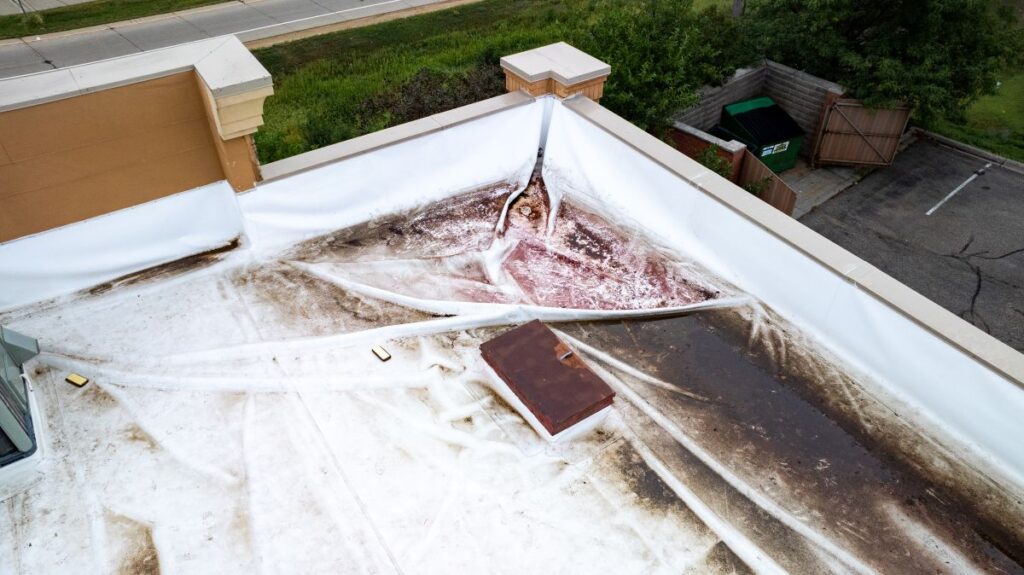
Frequent leaks are one of the strongest signs that a flat roof replacement is needed. Occasional leaks can usually be repaired, but when leaks become recurring, spread across multiple areas, or return shortly after being fixed, the roofing system has likely reached the end of its useful life. Repeated repairs add up quickly and rarely deliver lasting results on an aging roof. At that point, a full replacement is almost always more cost-effective than continued patchwork.
- Recurring leaks: Leaks that return after repair signal systemic failure.
- Multiple leak points: Leaks in several areas indicate widespread membrane issues.
- Repair costs: Repair frequency that approaches replacement cost is a clear warning sign.
3. Widespread Ponding Water and Drainage Issues
Persistent ponding water and drainage problems often indicate that a flat roof replacement is needed. While isolated ponding can sometimes be addressed with tapered insulation or added drains, widespread or recurring ponding usually points to deeper structural or membrane issues. Standing water shortens membrane lifespan, stresses adhesives, and accelerates wear. When ponding becomes a chronic problem, a full flat roof replacement is the most reliable long-term solution.
- Chronic ponding: Water that consistently lingers across the roof signals deeper problems.
- Drainage failure: Roofs with widespread drainage issues often need a redesigned system.
- Membrane stress: Standing water accelerates wear and shortens lifespan.
4. Widespread Membrane Damage or Aging
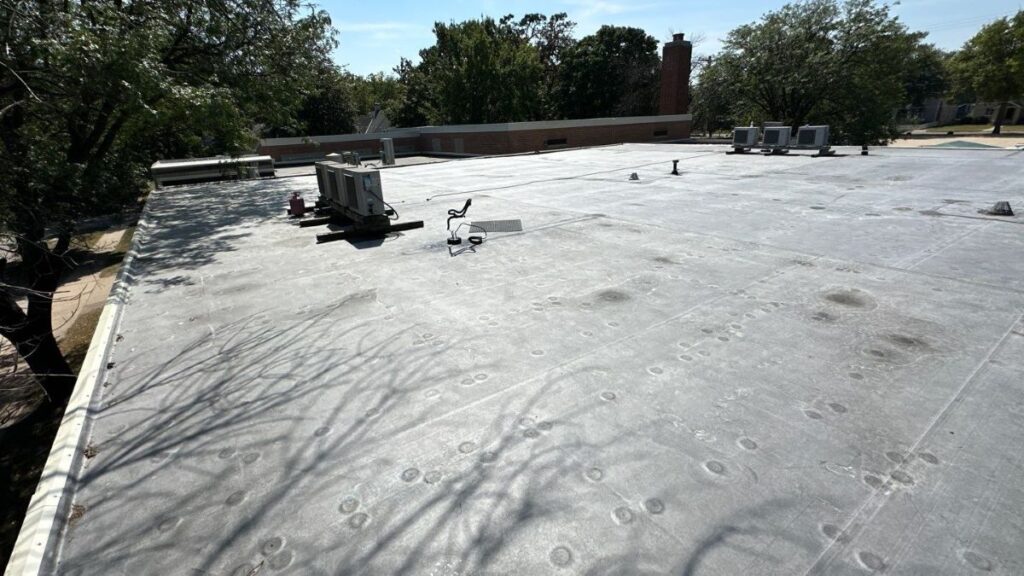
Significant membrane damage across large sections of the roof is another strong sign that a flat roof replacement is needed. Cracks, blisters, splits, and worn areas that appear in multiple locations point to widespread material failure. Once the membrane reaches this stage, repairs become less effective and more frequent. A full replacement with a new commercial roofing system delivers long-term performance, warranty protection, and peace of mind.
- Cracks and splits: Widespread membrane cracking indicates end-of-life conditions.
- Blisters and bubbles: Multiple blisters often signal adhesion failure across the system.
- Worn surface: Severe surface wear shows the membrane has lost protective capacity.
5. Rising Energy Bills and Wet Insulation
A sudden or steady rise in energy bills can be an unexpected sign that a flat roof replacement is needed. When moisture saturates the insulation beneath the membrane, the roof loses much of its thermal performance. This forces HVAC systems to work harder, raising utility costs over time. Wet insulation almost always indicates widespread moisture infiltration, which usually means the roofing system needs to be replaced rather than repaired.
- Higher utility costs: Wet insulation reduces overall energy efficiency.
- Soft spots: Spongy areas underfoot indicate saturated insulation.
- Uneven temperatures: Hot or cold spots suggest insulation failure.
6. Visible Sagging or Structural Concerns
Visible sagging or structural concerns are serious signs that a flat roof replacement is needed, sometimes urgently. Sagging can indicate trapped moisture, weakened decking, or structural strain that cannot be resolved through repair alone. These issues often require immediate attention to protect the safety of the building. A professional commercial roofing contractor should assess the structure right away and recommend the appropriate replacement plan.
- Sagging areas: Visible dips or sags indicate structural or moisture issues.
- Soft decking: Deteriorated decking signals deeper structural concerns.
- Safety risks: Structural issues require immediate professional assessment.
Cost Breakdown of a Commercial Flat Roof Replacement
Understanding the cost breakdown of a commercial flat roof replacement helps property owners plan and budget with confidence. Total costs depend on system type, building size, and project complexity, but the major cost categories follow a predictable pattern.
Cost Per Square Foot by System
The cost per square foot of a commercial flat roof replacement varies significantly depending on the roofing material selected. Each system offers a different combination of upfront cost and long-term performance, which is why understanding these ranges helps you make a smart decision. Material choice is one of the biggest cost drivers in any flat roof replacement project.
- TPO roofing: Generally $7 to $13 per square foot installed.
- EPDM roofing: Typically $6 to $12 per square foot installed.
- PVC roofing: Usually $9 to $15 per square foot installed.
- Modified bitumen: Often $7 to $14 per square foot installed.
Total Project Cost by Building Size
When scaled to a full commercial building, the total cost of a flat roof replacement becomes a major capital investment. The size of the building has a direct impact on overall project cost, although larger projects sometimes benefit from improved per-square-foot efficiency. Understanding these total cost ranges helps commercial property owners plan and prepare for the investment.
- Small commercial buildings: Roof replacement often ranges from $50,000 to $150,000.
- Mid-size commercial properties: Replacement projects typically cost $150,000 to $500,000.
- Large commercial facilities: Projects can exceed $500,000 depending on scope and system.
Common Additional Costs
Beyond the base cost of the new roofing system, several additional expenses can affect the final price of a commercial flat roof replacement. Being aware of these helps property owners prepare a complete and accurate budget. A reputable commercial roofing contractor will outline these costs clearly in the initial proposal.
- Tear-off and disposal: Removing the old roof adds labor and disposal costs.
- Deck repairs: Damaged decking discovered during tear-off may require replacement.
- Permits and inspections: Local permit fees and inspections vary by municipality.
How to Plan a Smart Flat Roof Replacement
Planning a flat roof replacement carefully helps you protect your investment and avoid unexpected costs. The right plan combines strong contractor selection, clear timelines, and detailed budgeting.
Work With an Experienced Commercial Roofing Contractor
The contractor you choose has a direct impact on the success of your flat roof replacement. An experienced commercial roofing contractor will evaluate your building, recommend the right system, and deliver high-quality installation that protects your investment. The right contractor also handles permits, scheduling, and tenant communication smoothly throughout the project. Choosing a reputable, experienced team is one of the most important steps in any successful replacement.
- Experience level: Choose a contractor with proven commercial flat roof experience.
- System expertise: Look for specialists in TPO, EPDM, PVC, or other systems.
- Local knowledge: Contractors familiar with Minnesota and Wisconsin understand local conditions.
Plan the Timing and Budget Carefully
Timing and budgeting are two of the most important parts of any flat roof replacement plan. Many commercial property owners benefit from planning their replacement during favorable seasons, when contractors have more availability and weather conditions support efficient installation. Building a detailed budget that includes additional cost categories such as tear-off, deck repairs, and permits ensures fewer surprises during the project. A clear, well-built plan delivers a smoother and more cost-effective replacement.
- Seasonal planning: Choose timing that works for weather, operations, and contractor availability.
- Detailed budget: Include all expected and potential additional cost categories.
- Tenant coordination: Plan ahead for tenant communication and rooftop access.
Plan Your Commercial Flat Roof Replacement With Classic Construction
A timely flat roof replacement is one of the most important steps a commercial property owner can take to protect their building and lower long-term costs. From recognizing the warning signs to understanding the cost breakdown, smart planning helps you make a confident decision about your commercial roof. The right replacement paired with the right contractor delivers decades of strong performance and lasting value for your property.
At Classic Construction, we specialize in commercial flat roof replacement, repair, and inspection across Minnesota and Wisconsin. Our team brings deep experience with TPO, EPDM, PVC, modified bitumen, and other commercial roofing systems, expert craftsmanship, and a proactive approach that protects your investment from start to finish. If it might be time for a flat roof replacement on your commercial property, contact Classic Construction today to schedule a free roof inspection and get a clear, accurate plan for your project.


