

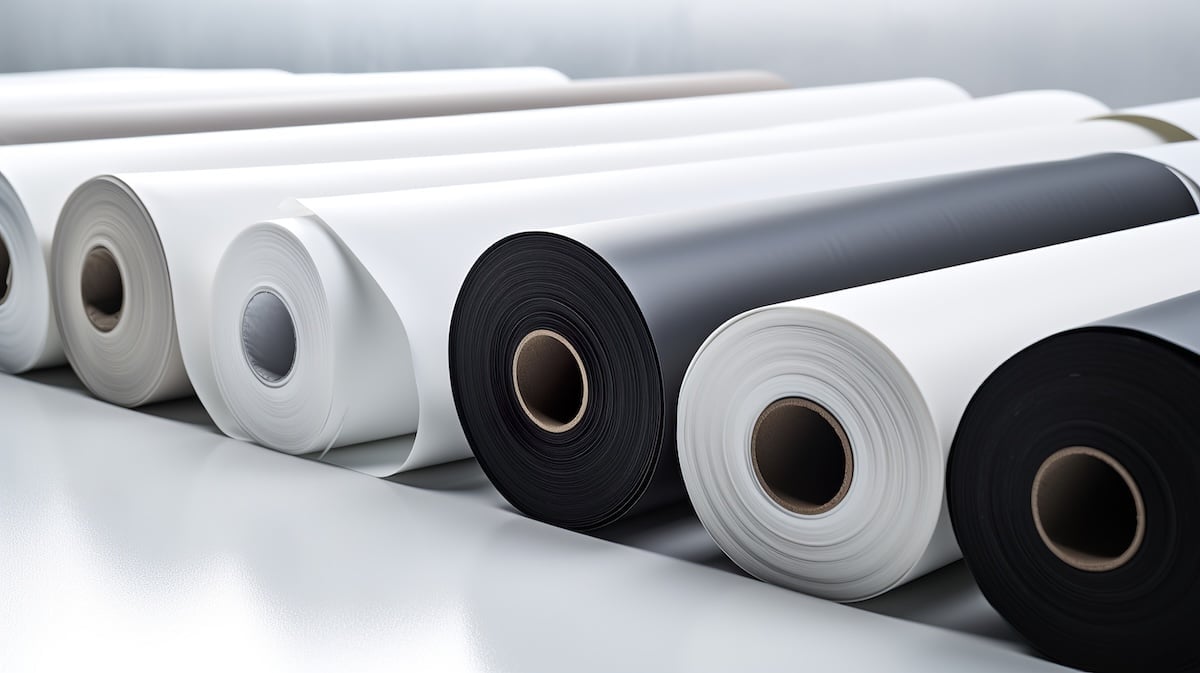
Choosing a roofing membrane for flat roofs on commercial and industrial buildings is a decision that affects your building for decades. When comparing TPO vs PVC roofing, many property owners notice that both systems look similar, use heat-welded seams, and reflect sunlight. The real differences show up in cost, chemical resistance, flexibility, and long term durability. Understanding those details helps you avoid costly mistakes and choose a system that supports a durable, efficient building envelope that protects your property and operations for years.
Here’s what we’ll compare:
- Why the right membrane choice matters for your budget
- Seven key differences between TPO and PVC
- Which buildings are best suited for each system
- Where the two membranes perform alike
- Answers to common owner questions
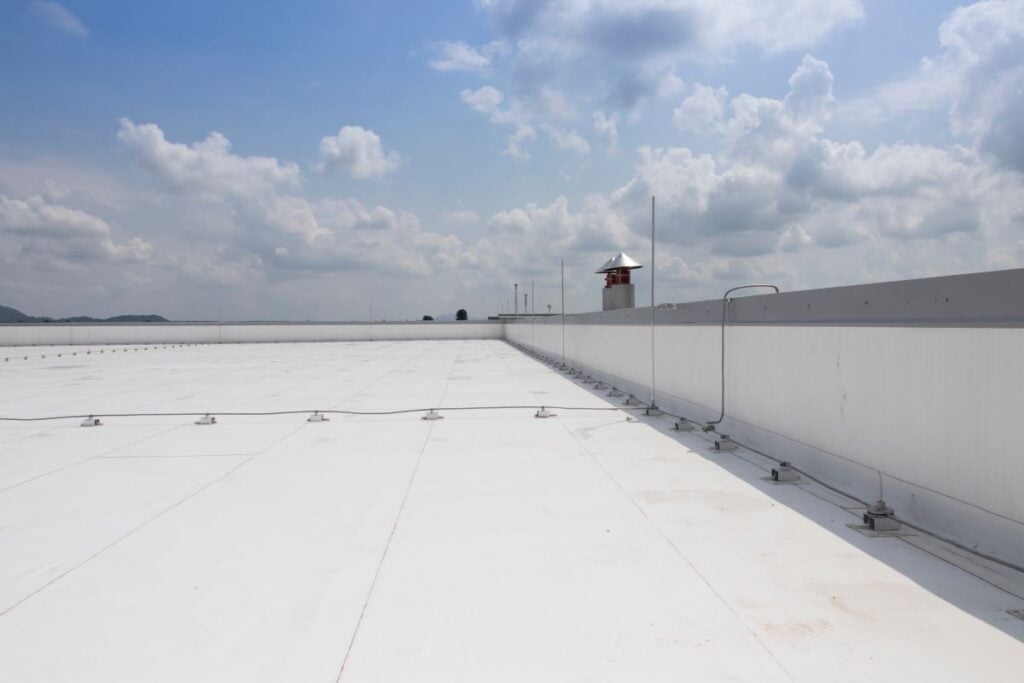
Why the Right Membrane Choice Pays Off for Years
Your roof protects inventory, equipment, tenants, and daily operations, so choosing the wrong roofing material can create problems that last as long as the roof itself. A system that is poorly matched to the building may wear out early, react badly to rooftop exhaust, or require more frequent repairs. Making an informed choice upfront is one of the simplest ways to protect your roofing investment.
Selecting the right membrane delivers several clear benefits:
- Better value for your investment: Matching the membrane to your building’s needs helps you avoid paying for features you do not need or missing protection you do.
- Longer service life: A system suited to your rooftop conditions and environmental factors resists heat aging, shrinkage, and seam failures.
- Lower energy costs: The reflective property of white TPO and PVC membranes improves energy efficiency and can reduce cooling demand during hot summers.
- Fewer repairs and disruptions: The right material for grease, chemicals, or heavy foot traffic means fewer leaks and fewer interruptions for tenants and staff.
Reviewing side-by-side membrane comparisons is a useful place to start, but your building’s specific conditions should guide the final decision. Rooftop equipment, drainage, and the type of business below the roof all play a role. For property owners in Denver and surrounding areas, intense UV rays at high elevation, hail, and extreme weather conditions make membrane selection especially important.
7 Key Differences Between TPO and PVC
TPO and PVC are both single ply roofing membranes, which is why they are often compared side by side. However, their chemistry and performance characteristics differ in ways that matter for many commercial buildings.
1. Material Composition
TPO, or thermoplastic polyolefin, is made from a blend of polypropylene and ethylene-propylene rubber. PVC, or polyvinyl chloride, is made from vinyl resin combined with plasticizers that keep the membrane flexible.
- TPO contains no chlorine or plasticizers
- PVC relies on plasticizers for flexibility
- Both install as a single layer reinforced with a polyester scrim
2. Upfront Cost
TPO is generally the more budget-friendly option, which is one reason TPO roofing has become the most widely installed commercial membrane in the roofing industry. PVC usually costs more for materials, though pricing varies by manufacturer, membrane thickness, and project size.
- Installation complexity and labor costs per square foot often affect total cost more than the membrane
- Thicker membranes raise material costs for both systems
- Extended warranties can change the final price significantly
3. Lifespan and Track Record
PVC has been used on commercial roofs for decades and has a long, well-documented performance history. TPO is newer, and early formulations struggled with heat aging and UV resistance, but modern TPO roofing membranes from reputable manufacturers have improved considerably.
- Both commonly last 20 to 30 years with proper care
- Membrane thickness, material quality, and installation quality strongly affect lifespan
- Regular maintenance helps both systems reach their full service life
4. Chemical and Grease Resistance
This is one of the biggest practical differences. PVC holds up exceptionally well against grease, oils, industrial pollutants, and many chemicals, while TPO can degrade when exposed to these substances over time.
- PVC is a strong fit for restaurants with kitchen exhaust
- PVC also suits manufacturing facilities and other buildings exposed to chemicals
- PVC KEE blends add extra durability for especially harsh roofing applications
- TPO works well where chemical exposure is minimal
5. Fire Resistance
PVC’s chemical makeup gives it natural fire-resistant properties, and it tends to self-extinguish once a flame source is removed. TPO relies on added fire retardants, and both membranes can achieve strong fire ratings as part of a properly designed roof assembly. Your contractor can confirm which assembly meets local building codes and insurance requirements for your property.
6. Flexibility and Installation
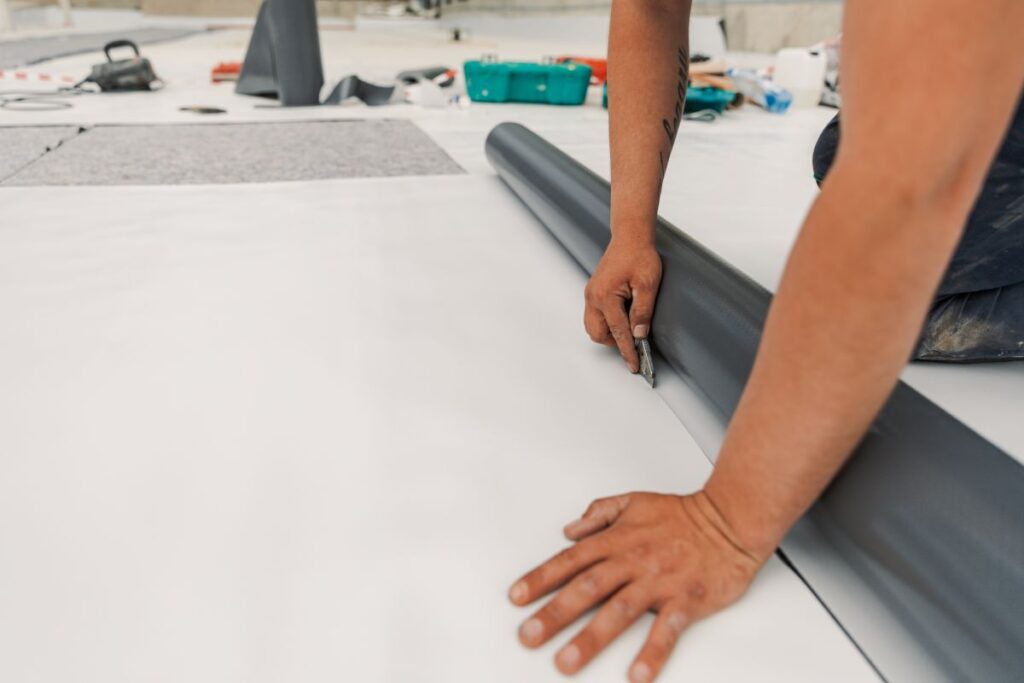
PVC is typically more flexible, which can make detailing around vents, curbs, and corners easier. TPO is stiffer, especially in cold climates, and requires skilled installers to achieve clean flashing details, though it can often be installed across a wide temperature range. On roofs with many penetrations, the added flexibility of PVC can save labor time and reduce the risk of detailing errors. Both membranes can be mechanically attached, fully adhered, or induction welded to plates beneath the sheet, and the installation method affects both installation speed and cost.
7. Environmental Considerations
TPO is chlorine-free and widely recyclable, making it an environmentally friendly choice for owners focused on sustainability. PVC can also be recycled, but its production involves chlorine and plasticizers, which some owners prefer to avoid. Over many years, plasticizers in PVC can gradually migrate out of the membrane, which is why quality formulations and proper maintenance matter.
Each of these differences carries more or less weight depending on your building. A restaurant, warehouse, and office building may all reach different conclusions based on the same set of facts.
Which Buildings Are Best Suited for Each Membrane
Rather than asking which membrane is better overall, it helps to ask which one is better for your specific property. The type of business, rooftop activity, and budget usually point clearly toward one option.
When TPO Makes More Sense
TPO roofing systems are often the practical choice for large roofs where cost efficiency is a priority and chemical exposure is limited.
- Warehouses and distribution centers
- Office buildings and retail centers
- Multi-tenant commercial properties
- Owners seeking strong reflectivity at a lower price
When PVC Makes More Sense
PVC roofing systems shine on buildings where grease, chemicals, or fire resistance are major concerns, or where complex roof details benefit from a more flexible membrane.
- Restaurants and food processing facilities
- Manufacturing plants with rooftop exhaust
- Hospitals and laboratories
- Roofs with many penetrations and complex details
When Either Can Work
Many buildings could perform well with either system, especially standard low-slope roofs with little chemical exposure. In those cases, budget, warranty options, and roofing contractor experience often become the deciding factors.
A professional inspection helps identify the rooftop conditions that should drive your choice. Owners in Denver and surrounding areas benefit from an assessment that considers local weather, building use, and long-term plans for the property.
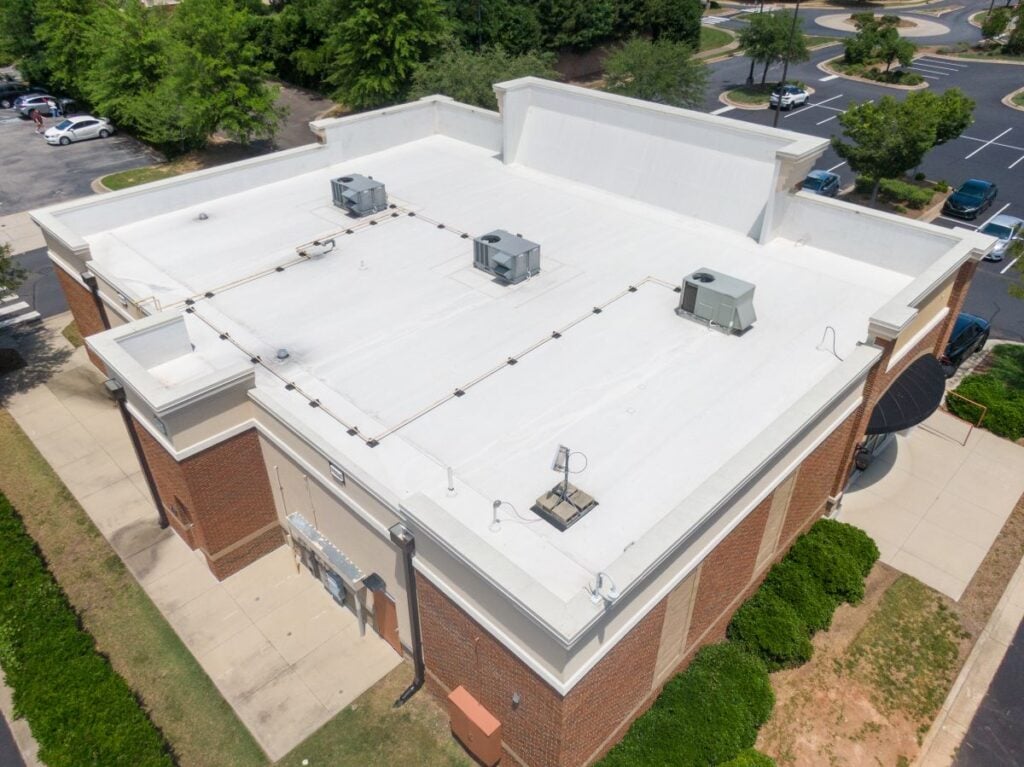
TPO and PVC at a Glance
Seeing the two membranes side by side makes it easier to weigh the tradeoffs. The table below summarizes how TPO and PVC compare across the factors that matter most to building owners.
| Feature | TPO | PVC |
| Relative cost | Lower | Higher |
| Typical lifespan | 20 to 30 years | 20 to 30 years or more |
| Grease and chemical resistance | Moderate | Excellent |
| Fire resistance | Good with added retardants | Excellent, self-extinguishing |
| Flexibility | Stiffer, especially in cold weather | More flexible and easier to detail |
| Seam type | Heat-welded | Heat-welded |
| UV resistance | Good in modern formulations | Excellent |
| Attachment methods | Mechanically attached, adhered, or induction welded | Mechanically attached, adhered, or induction welded |
| Reflectivity | High in white finishes | High in white finishes |
| Recyclability | Widely recyclable | Recyclable |
Where TPO and PVC Perform Alike
Despite their differences, the two membranes share several important strengths:
- Heat-welded seams that create strong, watertight bonds
- Reflective white surfaces that help lower cooling costs
- Lightweight construction suitable for many roof decks
- Multiple attachment options, including mechanically fastened and fully adhered
Because the two systems share so many strengths, the installation process often matters as much as the membrane itself. Even the best material will fail early if seams, flashing, and edge details are not completed correctly.
Frequently Asked Questions About TPO vs PVC Roofing
Building owners and property managers often have similar questions when comparing these two membranes. Here are straightforward answers to some of the most common ones.
Is TPO or PVC more affordable?
TPO is usually the more affordable option upfront. PVC typically costs more but offers added resistance to grease and chemicals, which can make it the better long-term value for certain buildings.
Which membrane lasts longer?
TPO and PVC roofing both commonly last 20 to 30 years. PVC has a longer track record, while modern TPO products have improved significantly in durability.
Can TPO be used on a restaurant roof?
It can, but PVC is usually recommended for restaurants because grease from kitchen exhaust can break down TPO over time.
Are TPO and PVC energy efficient?
Yes. TPO and PVC membranes are both available in reflective white finishes that help reduce heat absorption and cooling costs during warmer months.
Which membrane is best for hail-prone areas?
Thicker membranes of either type perform better against hail. In Denver and surrounding areas, choosing a thicker membrane and a quality cover board can improve impact resistance.
Every building has unique needs, so these answers are a helpful starting point rather than a final recommendation. A professional roof assessment will give you guidance tailored to your property.
Choose the Right Membrane With Expert Guidance
Choosing between TPO and PVC is easier when you understand how your building’s use, budget, and rooftop conditions affect performance. The right decision protects your investment, reduces maintenance, and keeps your operations running smoothly for years. Classic Construction & Consulting helps commercial property owners compare roofing systems, evaluate roof conditions, and install systems built for long-term performance. If you own or manage a commercial building in Denver and surrounding areas, contact us today to schedule an assessment and find the best roofing solution for your property.


