

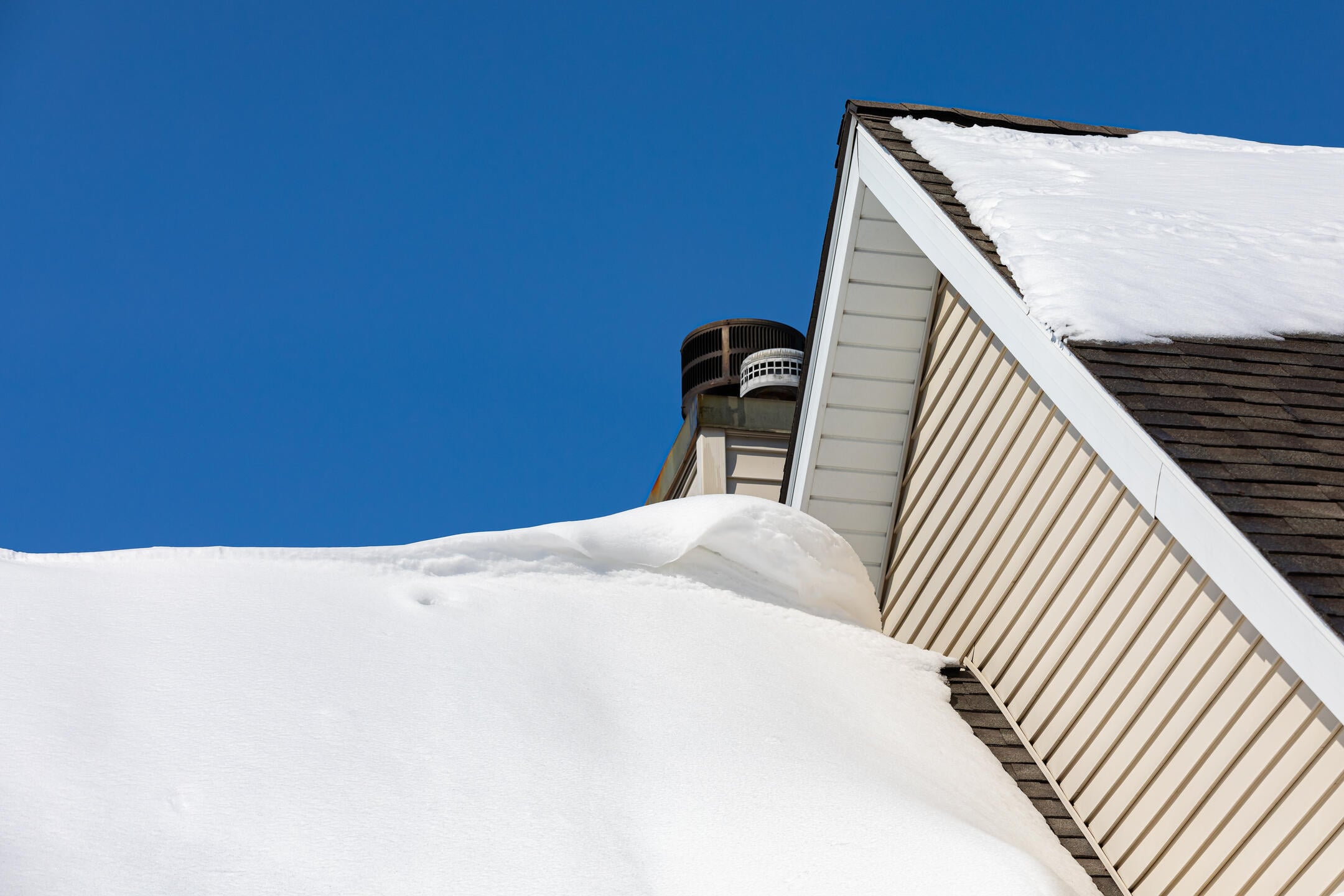
A fresh blanket of snow can look peaceful, but every inch adds weight your roof has to carry for days or even weeks. Understanding roof snow load helps you know when your roof is handling winter just fine and when it may be under real stress. Heavy, wet snow, ice buildup, and drifting can push a roof past its limits, leading to leaks, sagging, or structural damage. If you’ve ever dealt with repairing a roof after a tough winter, you know how quickly snow problems can become expensive.
Here’s what you’ll find below:
- What snow load means for your home
- Eight factors that change how much weight your roof carries
- Warning signs of too much snow
- Safe ways to manage snow buildup
Why Snow Weight Deserves Your Attention Every Winter
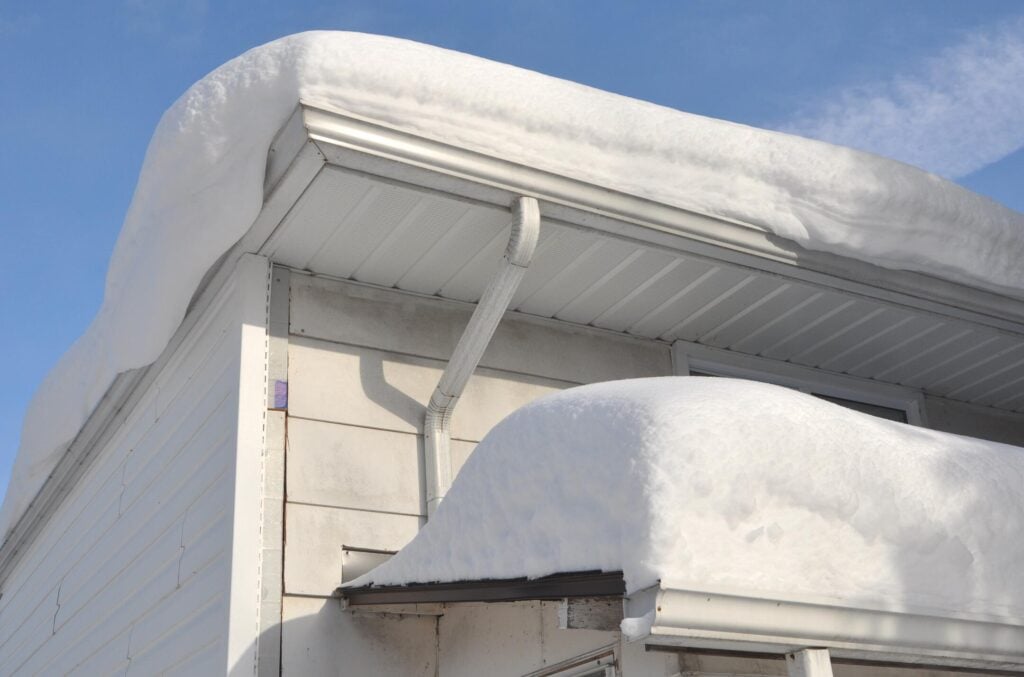
Snow load is the downward force that accumulated snow and ice place on your roof. Engineers start with the ground snow load, a baseline reflecting snow weight with a 2% chance of being exceeded in any given year, then adjust it for each roof’s design. Most homes are built to handle a certain amount of weight, but that capacity can shrink as roofs age or when conditions change quickly. For homeowners in Rochester and surrounding areas, where long winters and heavy snowfall are the norm, understanding how much snow a roof can hold is part of protecting your home.
Here’s why it matters:
- Prevents structural damage: Too much weight can strain roof framing members like rafters and trusses, threatening your home’s structural integrity and, in rare cases, causing collapse.
- Reduces leak risk: Heavy snow often leads to ice dams, which push water under shingles and into your attic.
- Protects your investment: Catching problems early helps you avoid costly repairs and extends the life of your roof.
- Keeps your family safe: Knowing the warning signs helps you act before a small concern becomes a dangerous situation.
Most roofs come through the winter months without serious trouble, but heavy seasons can test even well-built homes. A little knowledge helps you recognize when it’s time to take action.
8 Factors That Determine Your Roof’s Snow Load
Snow load isn’t just about how much snow falls. Several factors work together to decide how much weight actually sits on your roof and how well your roof can handle it.
1. Type and Density of Snow
Snow density plays a crucial role. Fresh, fluffy snow weighs roughly 5 to 10 pounds per cubic foot, while wet, heavy snow can weigh several times as much. As a rough guideline commonly shared by safety experts:
- About 10 to 12 inches of fresh snow weighs roughly 5 pounds per square foot
- About 3 to 5 inches of old, packed snow weighs about the same
- A single inch of ice can weigh as much as a foot of fresh snow
2. Total Accumulation Over Time
One storm rarely causes problems on its own. The real risk comes when snow builds up from several storms without melting, slowly adding weight week after week. Depth alone doesn’t tell the full story, since the weight of snow depends on its density.
3. Rain on Snow and Freeze-Thaw Cycles
When rain falls on existing snow, the snow acts like a sponge and becomes much heavier. Freeze-thaw cycles can also turn soft snow into dense, icy layers that add significant weight.
4. Roof Pitch and Slope
Steeper roofs tend to let snow slide off more easily, while low-slope and flat roofs hold onto it. Flat roof snow load is often a bigger concern for that reason. A gentle pitch can allow snow to pile up and stay put for long periods.
- Steep roofs shed snow more naturally
- Low-slope roofs need closer monitoring
- Flat sections may require regular snow removal
5. Roof Shape and Drifting
Valleys, dormers, and areas where a lower roof meets a taller wall or other structures often collect extra snow. Wind can also push snow into snow drifts, creating heavy spots that far exceed the load on the rest of the roof.
6. Structural Framing and Design Loads
Your roof structure, including rafters, trusses, and decking, determines how much weight it can safely support. Local building codes set minimum design loads based on historical regional snowfall data, and many follow the ASCE 7 standard for snow load requirements. Codes typically require at least 20 pounds per square foot even in low-snow areas, while the design ground snow load in northern regions often reaches 50 psf or more.
Engineers convert ground snow load into a flat roof snow load using a formula that accounts for other factors:
- Exposure factor: How wind and surrounding terrain affect how much snow stays on the roof
- Thermal factor: How much heat the building loses, which affects melting and retention
- Importance factor: Based on how the building is used and occupied
Older homes or remodeled spaces may not meet current standards. Structural drawings or a structural engineering review can confirm what your roof was constructed to withstand.
7. Roof Age and Condition
An older roof with weakened decking, water damage, or past repairs may not hold up as well as a newer one. Rot, sagging, or prior leaks can all reduce how much weight your roof can handle.
- Inspect older roofs before winter
- Address soft spots or leaks promptly
- Watch for changes in the roofline
8. Attic Insulation and Ventilation
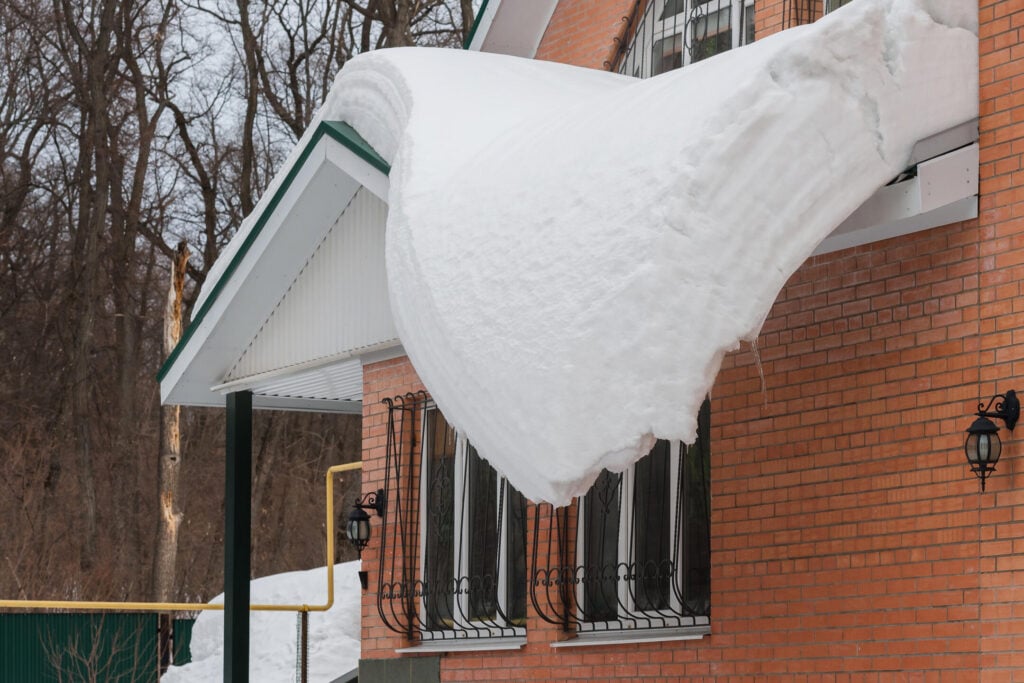
Poor insulation and ventilation let heat escape into the attic, melting snow on the roof surface. That water refreezes at the colder eaves, forming ice dams that add weight and trap more snow behind them.
Because a roof’s snow load capacity is calculated for its location and structural design, two houses on the same street can handle the same storm very differently. Understanding your roof’s specific risks helps you decide how closely to monitor it during heavy winters.
Warning Signs Your Roof Is Carrying Too Much Snow
Your home often gives clues when the roof is under strain. Knowing what to look and listen for can help you act before minor stress turns into serious damage.
- Visible sagging: A dip in the roofline or ceiling is one of the clearest signs of excessive weight.
- Creaking or cracking sounds: Unusual noises from the attic or ceiling may mean the framing is under stress.
- Sticking interior doors: Doors that suddenly stick, especially on upper floors, can signal that the structure is shifting.
- New cracks in walls or ceilings: Fresh cracks in drywall or plaster near door frames may point to added load from above.
- Leaks or water stains: Water spots often appear when ice dams force melting snow under the shingles.
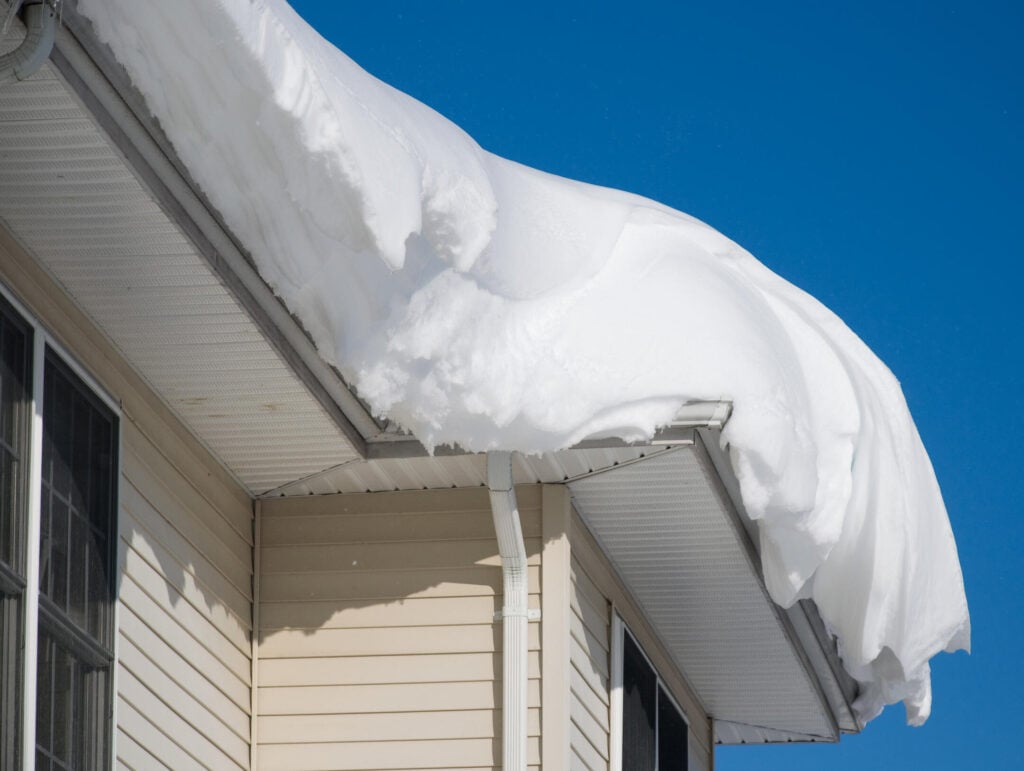
- Large ice dams and icicles: Heavy ice along the eaves adds weight and often means more problems are developing.
If you notice any of these signs, take the necessary safety precautions and avoid going into the attic or onto the roof if it seems unsafe. Leave the house if you hear loud cracking or see rapid sagging, and contact a professional right away.
Managing Snow Load Safely
When heavy snowfall builds up, it’s natural to want to clear it right away. The key is to reduce the load without damaging your roof or putting yourself at risk.
| Method | How It Works | Things to Keep in Mind |
| Roof rake | Pulls snow off the lower edges from the ground | Best for single-story homes; leave a thin layer to protect shingles |
| Professional snow removal | Trained crews clear snow with proper equipment | Safest choice for steep, tall, or heavily loaded roofs |
| Heat cables | Help create channels for meltwater along eaves | Can reduce ice dams but don’t remove heavy snow |
| Improved insulation and ventilation | Keeps the roof surface cold and evenly frozen | Long-term fix for ice dams and uneven melting |
Snow Removal Dos and Don’ts
- Do work from the ground whenever possible
- Do leave a few inches of snow to avoid scraping shingles
- Do secure ladders and step carefully if you need one to reach a low edge
- Don’t climb onto an icy or snow-covered roof
- Don’t use snow blowers, metal shovels, picks, or sharp tools on the roof surface
- Don’t use rock salt or harsh de-icers that can damage roofing materials
- Don’t remove snow near power lines
Homeowners in Rochester and surrounding areas often find that a mix of preventive upgrades and timely snow removal keeps their roofs in good shape all winter. Pairing those steps with an annual inspection helps you stay ahead of problems before the next big storm.
Frequently Asked Questions About Roof Snow Load
Snow on the roof raises plenty of questions, especially during a heavy winter. Here are clear answers to some of the most common ones.
How much snow can my roof hold?
It depends on your roof’s design, age, and the type of snow. Your roof was designed for the expected snow loads in your region, but heavy, wet snow and ice reach the limit much faster.
What is ground snow load?
Ground snow load is the baseline snow weight engineers use for structural design. It’s adjusted for roof slope, exposure, and heat loss to find the load your roof is built to handle.
Should I remove snow from my roof?
Not always. Light snow on a sturdy roof usually isn’t a problem. Removal makes sense when snow is deep, wet, or heavy, or when you see warning signs like sagging or sticking doors.
Is it safe to climb on my roof to clear snow?
No. Snowy and icy roofs are extremely slippery and dangerous. Use a roof rake from the ground or hire professionals for safe removal.
Does homeowners insurance cover snow damage?
Many policies cover damage from the weight of snow and ice, but coverage varies. Damage caused by poor maintenance may not be covered, so check your policy details.
How can I prevent ice dams?
Improve attic insulation and ventilation to keep the roof surface evenly cold. A roofer can also check for gaps that let warm air escape into the attic.
Every roof is different, and the right approach depends on your home’s structure and condition. A local roofing professional can help you understand how your roof handles winter weather.
Prepare Your Roof for Whatever Winter Brings
Snow load is something every homeowner in a cold climate should understand, because the weight on your roof can change quickly from one storm to the next. Knowing the factors at play, the warning signs to watch for, and safe ways to manage buildup helps protect your home and your family. Classic Construction helps homeowners in Rochester and surrounding areas inspect roofs, repair winter damage, and make upgrades that improve performance in heavy snow. If you’re concerned about how your roof will handle the season ahead, contact us today to schedule an inspection.


