

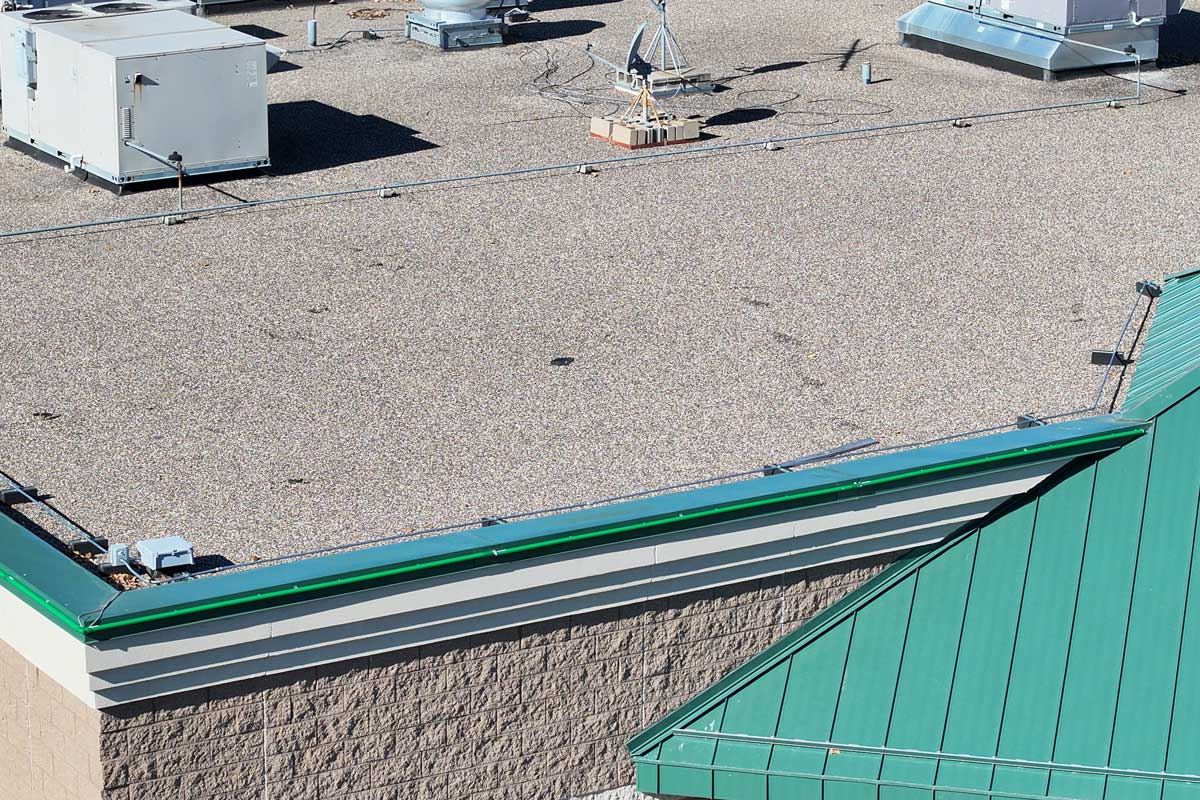
Flat roofs are common throughout Minnesota, especially on commercial buildings and multi-family properties. While they’re durable and practical, flat roofs face unique seasonal stresses, and winter is the most severe test of all. Snow loads, freeze-thaw cycles, trapped moisture, and extended ice buildup can turn even minor surface issues into costly structural failures.
Whether you manage a commercial building, oversee a portfolio of rental properties, or simply want to protect your business, early detection and spotting signs of flat roof damage is the key to preventing leaks, energy loss, and expensive emergency repairs. Below is a practical guide to spotting the earliest signs of flat roof damage, including both visible and hidden warning signals, so you can take action before snow and ice make repairs difficult, slow, or more costly.
Why Flat Roof Damage Worsens in Minnesota Winters
Flat roofs function differently from pitched roofs. Instead of shedding snow and water quickly, flat roofs rely on drainage systems and proper waterproofing layers to move water off the roof. Minnesota winters add additional risk because:
- Heavy snow and ice add to the weight load
- Freeze–thaw cycles expand any existing cracks
- Blocked drains cause pooling and infiltration
- Ice dams trap moisture and prevent proper drainage
- Winter repairs are harder, more expensive, and sometimes impossible
That’s why pre-winter inspections are a crucial part of responsible property management.
If you need help evaluating your roof’s condition, Classic Construction & Consulting offers flat roofing and exterior commercial services.
Early Warning Signs You Can See From the Ground
Not all roof problems require climbing a ladder. Many visible warning signs can be spotted from the parking lot, yard, or sidewalk.
1. Sagging or Uneven Areas
Flat roofs should appear consistently level. Visible dips or low spots typically indicate water pooling, which is a precursor to leaks, mold, and structural deterioration.
2. Discoloration or Dark Patches
Darkened areas may signal moisture absorption, algae growth, or roofing material failure.
3. Visible Cracks, Blisters, or Alligatoring
Blistered, cracked, or peeling roofing membranes indicate heat damage, aging, or moisture trapped beneath surface layers. These almost always worsen when temperatures swing.
4. Loose or Missing Flashing
Flashing protects roof seams and penetrations. If it’s loose, bent, corroded, or missing, leaks are highly likely.
Warning Signs You’ll Notice Indoors
If your roof has a hidden weakness, it may show up inside first.
1. Ceiling Stains or Bubbling Paint
Yellow, brown, or soft spots mean moisture has already entered your building envelope.
2. Musty Odors or Unexpected Humidity
Trapped moisture not only promotes mold, but it can also degrade insulation and drywall.
3. Drafts, Temperature Swings, or Increased Utility Bills
Roof membrane failure or wet insulation makes buildings harder to heat, especially in Minnesota winters.
4. Rusting Metal or Corroded Fixtures
If your attic, storage area, mechanical room, or upper hallway shows rust, moisture is entering through the roof.
Professional Signs Found During a Roof Inspection
Some of the most serious issues are invisible without a trained roofing professional. During a pre-winter evaluation, an expert will check for:
- Membrane seam weakness or separation
- Improper roof pitch and drainage design
- Under-membrane moisture using infrared scanning or probing
- Deteriorated insulation
- Hidden mold or mildew development
- Soft substrate that indicates long-term water infiltration
Damage beneath the surface is often the most expensive, and only professional inspection can reveal it.
Storm-Related Damage Is a Real Risk in Minnesota
Minnesota’s unpredictable weather can accelerate wear and tear on flat roofs much faster than in other regions. Hail can crack roofing membranes, high winds can loosen seams and flashing, heavy snow places significant stress on the roof structure and insulation, and ice storms can damage gutters and restrict proper drainage. Even when storms seem minor, the impact may not be visible right away. Issues that start in the summer or early fall often remain hidden until January, when repairs are more difficult, more expensive, and sometimes delayed due to weather conditions.
How Regular Roof Maintenance Saves Thousands
Flat roofs rarely fail overnight. Instead, they progress through a series of worsening issues that start small and gradually expand beneath the surface until they turn into major, unexpected budget shocks. A tiny seam separation or minor patch of moisture may not seem urgent at first glance, but when left untreated, it can lead to mold growth, interior leaks, insulation damage, structural rot, and eventually full roof replacement. The longer an issue remains undetected, the more complex and costly it becomes to correct. Consider the financial difference between early action and late-stage intervention:
| Issue Stage | Approximate Cost |
| Preventative maintenance | $200 – $500 |
| Small leak or seam repair | $500 – $1,500 |
| Moderate moisture intrusion | $2,000 – $7,000 |
| Mold, insulation, or decking failure | $10,000+ |
| Full replacement | $15,000 – $100,000+ |
Although every property and roof system is unique, this cost progression illustrates one important truth: inspections are far cheaper than repairs. When performed consistently, they not only extend the lifespan of your roof but also preserve building equity, prevent insurance complications, and reduce operational downtime.
A smart and stress-free way to stay ahead of damage is through Classic Club, a preventative roofing and exterior maintenance program built specifically for Minnesota property owners and property managers. Members receive scheduled twice-yearly inspections, front-of-the-line emergency repairs, and expert guidance throughout insurance claims, helping you avoid surprise expenses, business disruptions, and long-term deterioration. Learn more about Classic Club.
Plan Ahead and Schedule Your Flat Roof Inspection Before Winter Hits
The weeks leading up to winter are the most critical time to evaluate and service a flat roof, especially in Minnesota where heavy snowfall, fluctuating temperatures, and ice buildup can quickly turn small issues into major failures. Once snow and ice arrive, surface problems become harder to detect, repair timelines slow due to weather constraints, and emergency service costs can rise significantly. By taking action now, you protect your building from avoidable water intrusion, interior damage, disruption to business operations, and long-term asset depreciation.
Classic Construction & Consulting is in Stillwater, MN and serves surrounding cities including (but not limited to!) White Bear Lake, Minnetonka, and Eau Claire. provides thorough commercial flat roof inspections, documentation, and repair recommendations to help property owners, managers, and facility directors make informed, proactive decisions. Protect your building and maintain uninterrupted operations by scheduling your pre-winter inspection today.


