

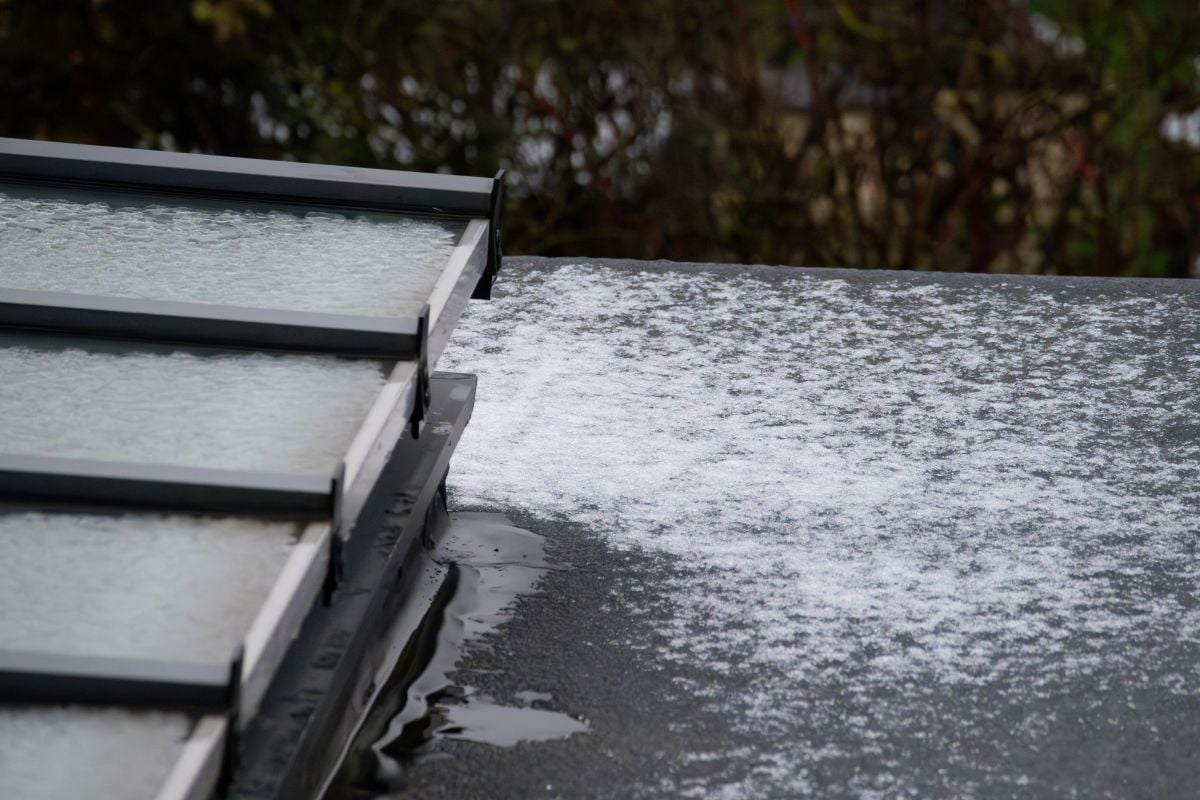
Knowing how to recognize and address a flat roof repair issue early is one of the most important skills a commercial property owner can develop. Flat and low-slope roofs are exposed to weather, foot traffic, and rooftop equipment every day, which means small problems can quickly turn into expensive ones if they go unnoticed. This guide walks through the most common flat roof repair problems, how each one happens, and the right solutions to fix them now before they damage your building.
- Early detection: Catching flat roof repair issues early saves money and prevents interior damage.
- Common problems: Most flat roof issues come from a small set of predictable causes.
- Right solutions: The correct repair depends on the cause, location, and severity of the damage.
Why Flat Roof Repair Issues Are So Common on Commercial Buildings
Flat and low-slope roofs are designed for performance and efficiency, but their design also creates unique repair challenges. Understanding why these issues occur is the first step in protecting your commercial roof from costly damage.
The Impact of Weather and Climate
Weather has a significant impact on the lifespan and performance of a flat commercial roof. temperature fluctuations, hail, heavy snow, ice, and intense UV exposure all create stress on the roofing membrane and accessories. Over time, this exposure leads to wear, cracking, and other damage that requires flat roof repair. In climates like Minnesota and Wisconsin, where seasonal extremes are common, weather is one of the leading reasons flat roofs need attention.
- Temperature fluctuations: Expansion and contraction can stress seams and flashings.
- Hail and wind: Storm damage often causes membrane punctures and lifted edges.
- UV exposure: uv rays break down materials and accelerate aging, while coatings can help protect the roof from sun exposure and temperature extremes.
High Exposure to Foot Traffic and Equipment
Flat commercial roofs experience more foot traffic than almost any other roof type. HVAC technicians, plumbers, and maintenance crews regularly walk on the membrane to service rooftop equipment, which puts steady wear on the surface. Penetrations from pipes, vents, and units also create transition points that are prone to leaks. These factors combined make flat roof repair a regular part of owning a commercial property.
- Foot traffic damage: Repeated walking wears down the membrane over time.
- Equipment penetrations: HVAC and vents create leak-prone points.
- Service activity: Frequent rooftop service raises the risk of damage.
7 Common Flat Roof Repair Problems and How to Fix Them
The following seven problems are the most common reasons commercial property owners need flat roof repair. Each one comes with its own causes, warning signs, and recommended solutions.
1. Ponding Water Issues on Flat Roofs
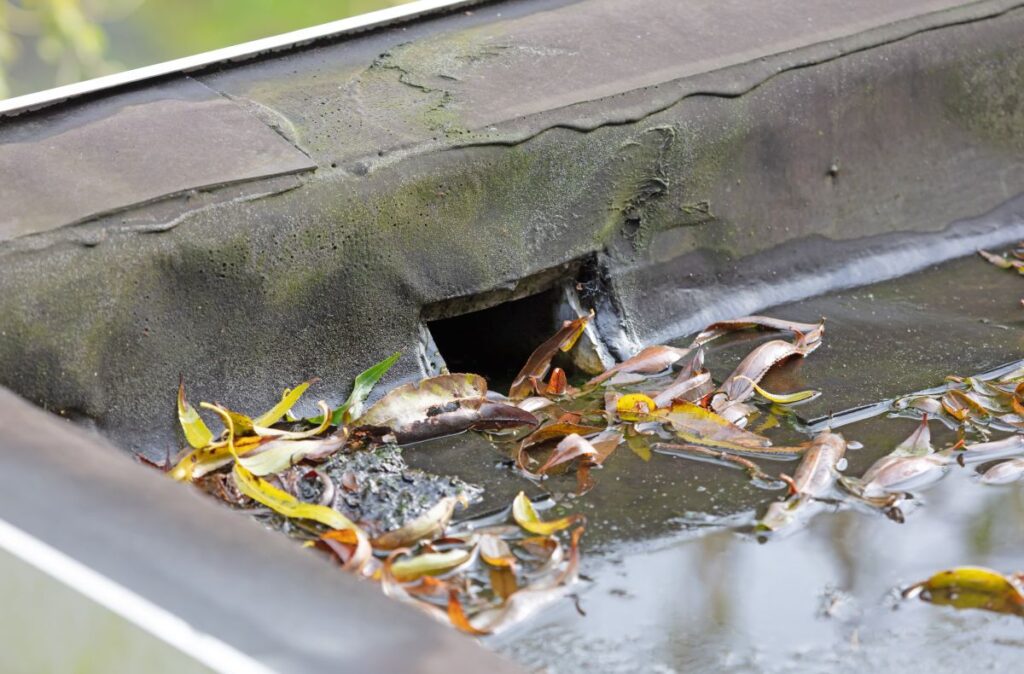
Ponding water is one of the most common flat roof repair issues on commercial buildings. Water that remains on the roof for more than 48 hours after a rainstorm puts ongoing stress on the membrane and can lead to long-term damage. Causes include clogged drains, sagging insulation, poor original slope design, failing drainage systems, and the roof’s slope, all of which can contribute to water pooling. Addressing ponding quickly is essential because chronic ponding can affect the roof structure, increase the risk of future leaks, and lead to further damage over time.
- Clogged drains: Remove debris and clear roof drains and scuppers as part of ensuring proper drainage; cleaning the roof frequently also helps prevent clogs, supports proper drainage, and extends roof life.
- Tapered insulation: Add tapered insulation to improve slope in problem areas.
- Drain additions: Install new drains where drainage capacity is insufficient, including installing additional drains where needed to improve runoff.
2. Damaged or Lifted Seams
Damaged seams are a leading cause of flat roof leaks on single-ply systems like TPO, EPDM, and PVC. Some systems, including modified bitumen, can also develop seam issues as materials age or shrink; modified bitumen membranes are prone to shrinkage over time, which can create gaps that allow water to infiltrate the building. Once a seam fails, water can easily enter the roofing system and cause hidden damage to insulation and decking. Quick seam repair is one of the most important flat roof repair priorities.
- Re-welded seams: Heat-weld TPO or PVC seams as part of the repair process to restore a watertight bond.
- Re-bonded EPDM seams: Clean the seam first, then use new seam tape or adhesive to repair EPDM seams.
- Sealant repairs: Restore seams with specialized sealants or roofing tape to maintain a watertight seal and prevent leaks.
3. Punctures, Tears, and Membrane Damage
Punctures and tears are a frequent flat roof repair issue caused by foot traffic, falling debris, hail, or aging materials. Even a small puncture can let in significant amounts of water and lead to interior damage over time. Repair options depend on the size, location, and severity of the damage, as well as the type of commercial roofing system in place. Acting quickly when membrane damage is identified is critical to protecting the building.
- Membrane patches: Apply compatible patches to seal punctures and tears.
- Reinforced repairs: Use reinforcement layers for larger or high-stress areas.
- Full section replacement: Replace large sections of damaged membrane when needed.
4. Damaged Flashing and Penetrations
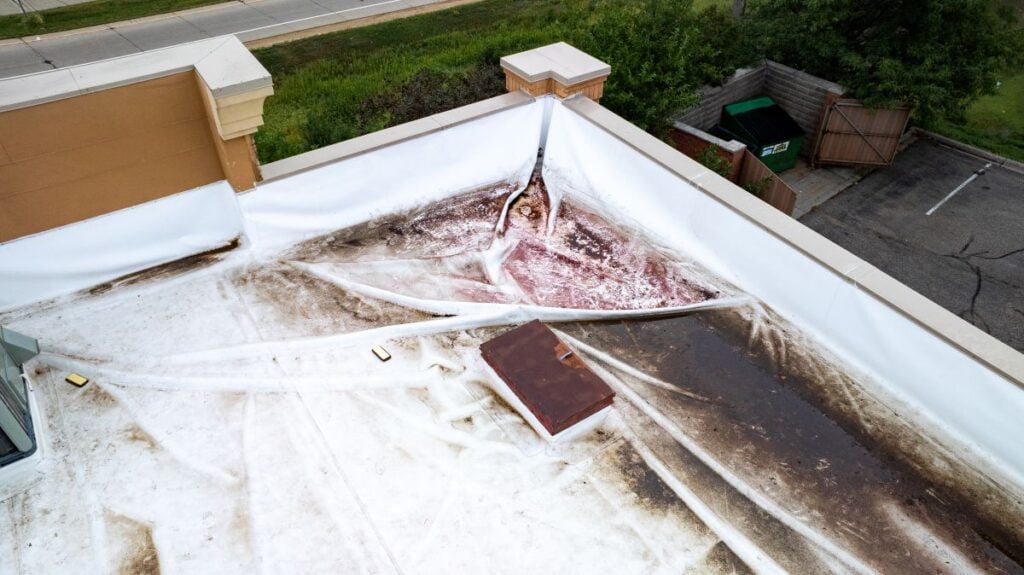
Flashing and penetration damage is one of the most overlooked flat roof repair issues. Every pipe, vent, HVAC unit, and edge represents a transition where the membrane meets another material, and these transitions are prone to leaks as they age. Cracked flashing, worn pipe boots, and dried sealant all need to be addressed before water can enter the system. Regular inspection of these areas is one of the best ways to prevent expensive repairs.
- Flashing replacement: Install new flashing around penetrations and edges.
- Pipe boot repairs: Replace aging boots around pipes and vents.
- Sealant renewal: Apply fresh sealant where the original has cracked or worn away.
5. Blisters, Bubbles, and Soft Spots
Blisters and soft spots indicate that moisture or air has become trapped beneath the roof membrane. While not every blister causes a leak, they often signal weakened adhesion that can lead to bigger problems over time, and trapped moisture can signal hidden saturation below the surface. Soft spots underfoot may also indicate that insulation has become wet and lost its effectiveness. A thorough flat roof repair plan addresses these issues before they cause leaks or energy loss.
- Cut and patch: Open blisters and apply compatible patches to restore the surface.
- Insulation replacement: Replace wet insulation in soft or sagging areas.
- Membrane reinforcement: Add reinforcement layers in weakened sections.
6. Storm and Hail Damage
Storm and hail damage is a major cause of flat roof repair on commercial buildings in Minnesota and Wisconsin. Hail can bruise or fracture the membrane, while strong winds can lift edges, flashings, and even sections of the roof. Falling debris from storms also causes punctures and tears. Quick, regular inspections after major weather events help document damage and support timely repairs.
- Hail repairs: Patch bruised or fractured membrane sections.
- Wind damage fixes: Re-secure lifted edges, flashings, and ballast.
- Debris cleanup: Keep the roof clean after storms so debris does not clog drainage paths, create a leaking flat roof, and add to repair needs.
7. Aging and General Wear
Every commercial roofing system has a finite lifespan, and aging is one of the most common reasons flat roof repair is needed. Prompt repairs and regular maintenance can extend the roof’s lifespan, but older membranes still lose flexibility, crack more easily, and develop more frequent issues as they approach the end of their service life. While targeted repairs can extend the life of an aging roof, there comes a point when restoration or replacement becomes the better long-term option. A trusted commercial roofing contractor can help you make the right decision.
- Targeted repairs: Fix specific problem areas to extend roof lifespan.
- Roof restoration: Apply a roof coating to renew an aging membrane; options like elastomeric coatings help protect against UV rays, improve energy efficiency, and may reduce energy bills.
- Full replacement: Replace the system when repairs are no longer cost-effective, especially when there is extensive damage and a tear off may be required.
How to Choose the Right Flat Roof Repair Solution
The right flat roof repair solution depends on several factors including the cause, location, severity, and the age of the existing roof. Working with the right contractor ensures you get a solution that delivers long-term value rather than just a short-term fix.
Match the Repair to the Problem
Not every flat roof repair issue requires the same solution. Small punctures may only need a patch, and some minor issues can be handled with a quick fix, such as applying waterproof sealant to the affected area until permanent repairs are completed, while widespread damage might require full section replacement or even restoration. Matching the repair approach to the specific problem helps you avoid overspending on minor issues and underspending on serious ones. Quick fixes for minor leaks often cost about $400 to $600, while all-day repair work for larger problems can range from about $1200 to $1500. A qualified commercial roofing contractor will recommend the right solution based on a complete inspection.
- Targeted patches: Use for small, isolated damage.
- Section replacement: Replace damaged areas while preserving the rest of the roof.
- Restoration coatings: Apply when the membrane is aging but still structurally sound.
Consider the Age and Condition of the Roof
The age and overall condition of your commercial roof should always factor into flat roof repair decisions. A relatively new roof with isolated damage is usually a good candidate for spot repairs, while an older roof with widespread issues may benefit more from restoration or replacement. Understanding where your roof stands in its lifespan helps you avoid investing in repairs that will not deliver long-term value. A reputable contractor can help you evaluate the best path forward.
- Roof age: Older roofs may benefit more from restoration or replacement.
- Repair frequency: Frequent repairs often signal a deeper issue.
- System condition: Overall membrane health should guide repair decisions.
Avoid These Flat Roof Repair Mistakes
Even well-intentioned property owners can make flat roof repair mistakes that lead to bigger problems. Being aware of these common errors helps you protect your commercial roof and get the most value from every repair.
Waiting Too Long to Act
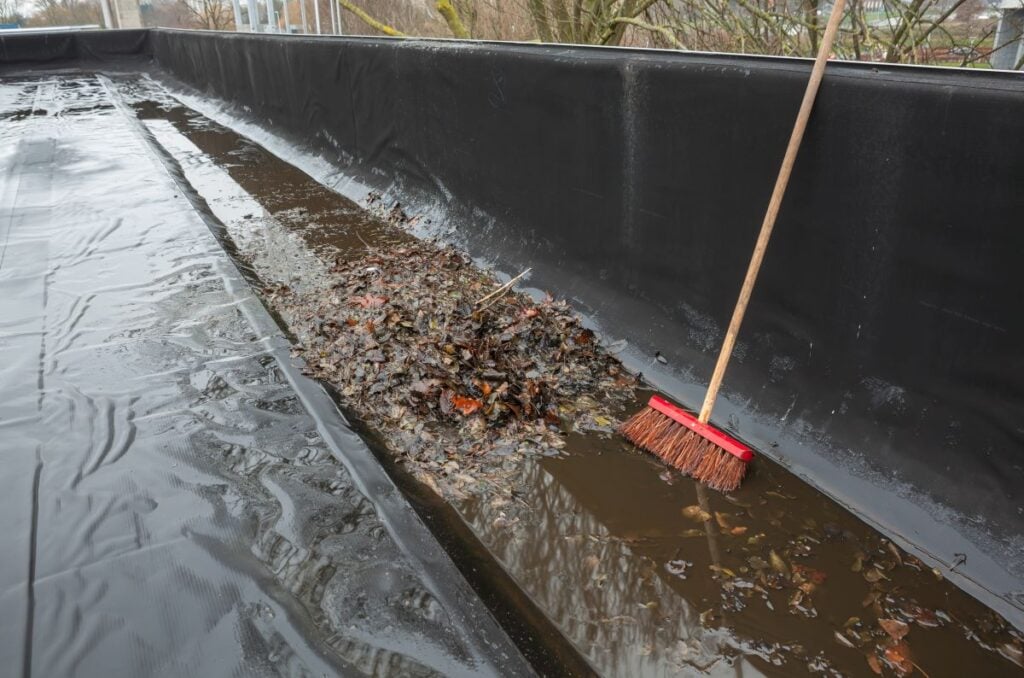
One of the most common flat roof repair mistakes is waiting too long to address small issues. A minor leak, lifted seam, or hairline crack may not seem urgent, but each one can grow quickly when water and weather are involved. Water can travel easily along horizontal flat roof joists before it shows up indoors, which is why early action matters. Delayed repairs almost always cost more than prompt action and often lead to interior damage that requires additional fixes. Acting quickly is one of the best ways to protect your commercial roofing investment, and a regular maintenance schedule should include a thorough inspection at least twice a year, typically in spring and fall, plus checks after major storms to catch issues before they become severe.
- Small leaks: Address minor leaks before they cause widespread damage.
- Visible damage: Repair visible issues promptly to prevent escalation.
- Inspection findings: Act on inspection recommendations without delay, since waiting can turn small problems into extensive damage and undermine building safety.
Choosing the Wrong Contractor
Choosing the wrong contractor for a flat roof repair can lead to poor workmanship, voided warranties, and recurring problems. An experienced commercial roofing contractor understands each commercial roofing system and uses the right materials and techniques for every repair. The wrong contractor may take shortcuts that cause more harm than good. Always choose a roofing partner with strong experience, references, and a clear plan for your specific project.
- Experience level: Choose a contractor with proven commercial roofing experience.
- System expertise: Look for specialists in your specific commercial roof system.
- Warranty support: Ensure the contractor works within your warranty requirements.
Fix Flat Roof Problems With Classic Construction
Flat roof repair is a critical part of protecting your commercial property and extending the life of your investment. From ponding water and lifted seams to storm damage and aging membranes, understanding the most common flat roof repair issues helps you act quickly and make smart decisions. The right repair paired with the right contractor delivers lasting protection and peace of mind for your building.
At Classic Construction, we specialize in flat roof repair, inspections, and replacement across Minnesota and Wisconsin. Our team brings deep experience with TPO, EPDM, PVC, and other commercial roofing systems, expert craftsmanship, and a proactive approach that protects your property long-term by following manufacturer’s instructions throughout the repair process. If you are dealing with a flat roof repair issue or want a professional assessment of your commercial roof, contact Classic Construction today to schedule a free roof inspection, get a clear plan to fix the problem now, and keep up with regular maintenance and inspections to help prevent leaks and extend the life of your roof system.


