

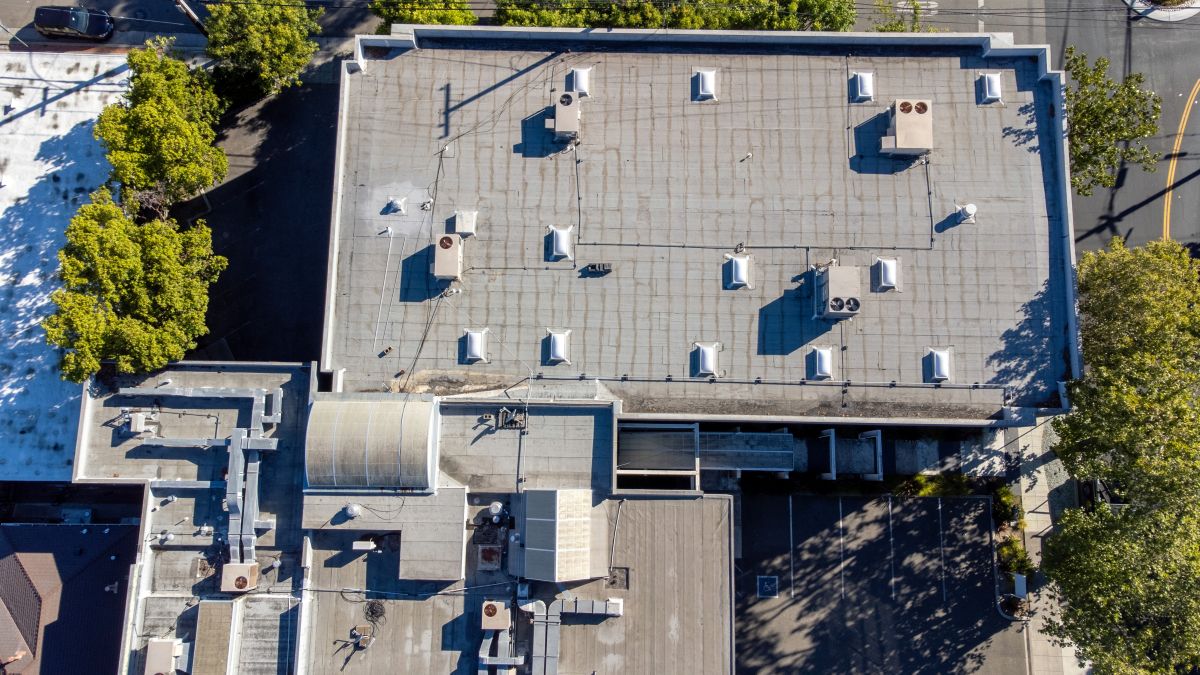
Flat roof vents play a critical role in keeping commercial buildings healthy, energy-efficient, and free from moisture damage over the long term. Many commercial property owners overlook ventilation when planning a new roof, but the right vent system can make a major difference in how the entire commercial roofing system performs. From controlling humidity to reducing energy costs and extending roof lifespan, flat roof vents deliver benefits that go far beyond simple air movement. This guide breaks down five common types of flat roof vents, the benefits they offer, and how to choose the right system for your commercial property.
- Moisture control: Flat roof vents help release trapped moisture and reduce condensation issues.
- Energy efficiency: Proper ventilation reduces strain on HVAC systems and lowers utility costs.
- Roof lifespan: Strong ventilation extends the life of the entire commercial roofing system.
Why Flat Roof Vents Matter on Commercial Buildings
Flat roof vents are an essential part of any well-designed commercial roofing system. They help balance air movement, regulate moisture levels, and protect the building from a range of long-term performance issues that can be expensive to fix.
The Role of Ventilation in Roof Performance
Flat roof vents play a direct role in how a commercial roofing system performs over time. Ventilation helps release warm, moist air from the building interior, balances pressure across the roof assembly, and prevents condensation that can damage insulation and decking. Without proper venting, even high-quality commercial roofs can suffer from hidden moisture problems and accelerated wear. Strong ventilation is a foundational part of building a healthy, long-lasting commercial roof.
- Air movement: Vents help move warm, moist air out of the building.
- Pressure balance: Ventilation balances air pressure across the roof system.
- Moisture release: Vents help prevent condensation inside the roof assembly.
The Risk of Skipping Ventilation
Skipping or undersizing flat roof vents on a commercial building can lead to a long list of problems over time. Trapped moisture can damage insulation, decking, and interior spaces, while poor ventilation can also raise energy bills and stress HVAC systems. Mold growth and indoor air quality issues are additional risks of poor commercial roof ventilation. A properly designed vent system protects the building from these avoidable problems.
- Moisture damage: Trapped moisture damages insulation, decking, and interior finishes.
- Higher energy costs: Poor ventilation raises utility bills over time.
- Indoor air quality: Poor venting can contribute to mold and air quality issues.
5 Common Types of Flat Roof Vents
The following five types of flat roof vents are some of the most common options used on commercial buildings today. Each one offers a different combination of performance, cost, and ideal application.
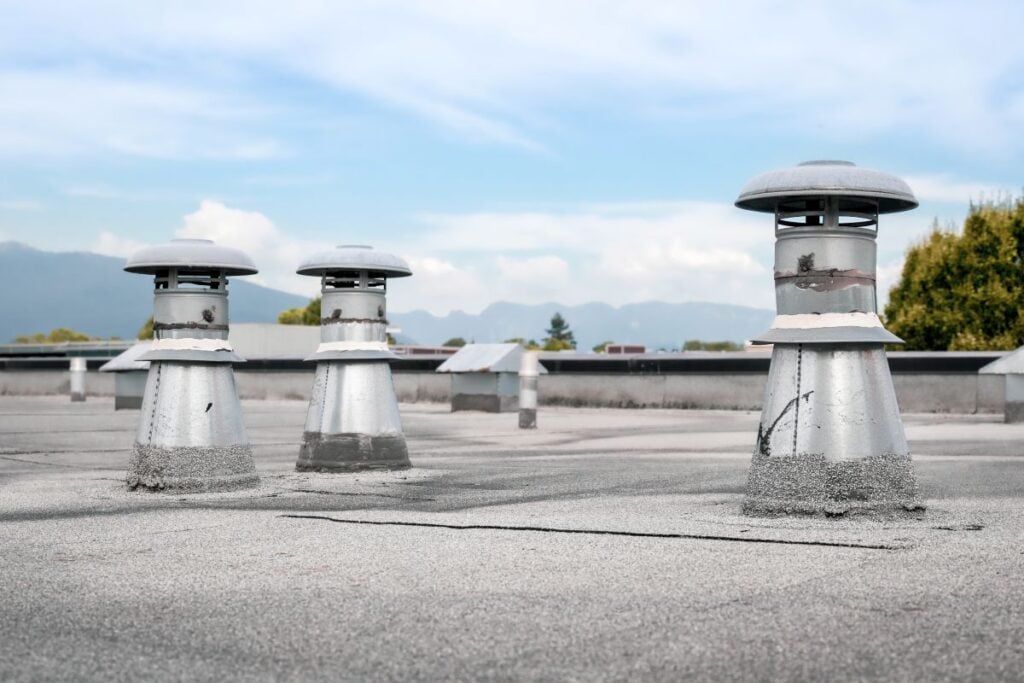
1. Pipe and Stack Vents
Pipe and stack vents are among the most common flat roof vents on commercial buildings. These vents handle plumbing exhaust and other interior venting needs by extending pipes through the roof assembly. While they are functional rather than decorative, they are critical to the proper operation of a commercial building. Pipe and stack vents need to be properly flashed and sealed to prevent leaks where they penetrate the roofing membrane.
- Plumbing function: Pipe vents release plumbing system gases safely.
- Membrane sealing: Proper flashing is critical to prevent leaks at the penetration.
- Standard component: Most commercial buildings include several pipe and stack vents.
2. Mushroom or Breather Vents
Mushroom vents, sometimes called breather vents, are passive flat roof vents designed to release moisture and balance air pressure within the roof assembly. They are typically installed in a grid pattern across the roof to allow trapped air and moisture to escape. Mushroom vents are simple, durable, and require no power, which makes them a low-maintenance option for many commercial roofs. They are especially helpful in regions like Minnesota and Wisconsin where moisture management is important throughout the year.
- Passive ventilation: Mushroom vents work without any external power.
- Moisture release: These vents allow trapped moisture to escape the roof assembly.
- Low maintenance: Simple design requires minimal long-term upkeep.
3. Powered Exhaust Vents
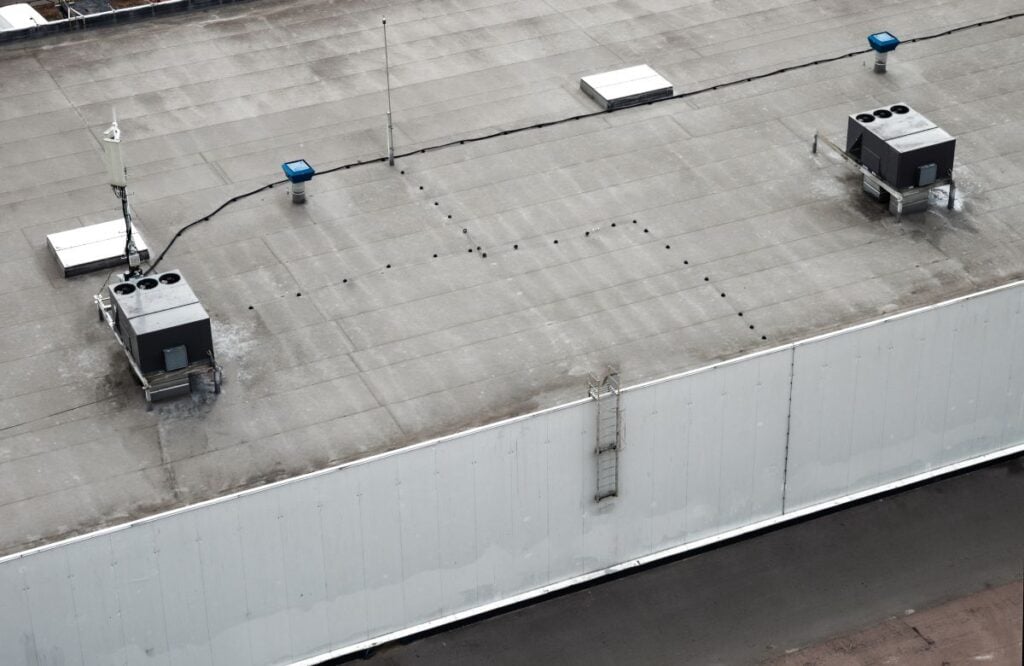
Powered exhaust vents are flat roof vents that use electric fans to actively move air out of the building or roof assembly. They are commonly used on commercial buildings with high humidity, large interior spaces, or specialized ventilation needs. Powered vents move more air than passive options and offer greater control over building airflow. They do require electricity and occasional maintenance, but the added performance is often worth it for the right commercial properties.
- Active airflow: Powered fans move large volumes of air efficiently.
- Strong control: Building managers can adjust ventilation as needed.
- High humidity solutions: Ideal for buildings with elevated moisture levels.
4. Solar-Powered Vents
Solar-powered flat roof vents combine the benefits of active ventilation with renewable energy. These vents use small built-in solar panels to power fans that move air through the roof assembly. They are an energy-efficient choice for commercial buildings looking to reduce operating costs while still benefiting from active ventilation. Solar vents are also a smart fit for buildings with sustainability or green building goals.
- Renewable power: Solar panels eliminate electricity use for ventilation.
- Energy savings: No added utility costs for active venting.
- Sustainability fit: Strong choice for green building strategies.
5. Wind Turbine Vents
Wind turbine vents use natural wind movement to spin a turbine and pull air out of the building or roof assembly. They are a passive yet active form of ventilation that operates without electricity or solar power. Wind turbine vents work especially well in open, windy locations and can move significant volumes of air when conditions are favorable. They are a cost-effective ventilation option for many commercial buildings.
- Wind-powered: Turbines spin with natural wind movement.
- No utilities required: Operates without electricity or solar power.
- Cost-effective: A budget-friendly active ventilation choice.
Key Benefits of Properly Installed Flat Roof Vents
Flat roof vents deliver a range of benefits for commercial buildings beyond simple air movement. Understanding these benefits helps property owners see the long-term value of investing in the right ventilation system.
Moisture Control
One of the biggest benefits of flat roof vents is moisture control. Without proper ventilation, warm moist air can become trapped inside the building or roof assembly, leading to condensation, mold growth, and hidden damage to insulation and decking. Strong ventilation helps release that moisture before it causes problems. This benefit is especially valuable in climates with significant temperature swings between seasons.
- Condensation prevention: Vents reduce condensation inside the roof system.
- Mold prevention: Moisture control helps prevent mold and air quality issues.
- Insulation protection: Vents help keep insulation dry and effective.
Energy Efficiency
Flat roof vents also support strong energy efficiency on commercial buildings. By reducing humidity and helping balance interior temperatures, ventilation lowers the workload on HVAC systems. This can deliver meaningful energy savings over time and reduce wear and tear on heating and cooling equipment. Strong ventilation is one of the most overlooked contributors to commercial building energy efficiency.
- Lower HVAC demand: Proper venting reduces strain on heating and cooling systems.
- Reduced utility costs: Lower HVAC demand translates into utility savings.
- Extended HVAC lifespan: Less strain leads to longer equipment life.
Extended Roof Lifespan
Strong ventilation extends the lifespan of the entire commercial roofing system. Moisture is one of the leading causes of premature roof failure, and reducing moisture buildup helps protect the membrane, insulation, and decking. A well-ventilated commercial roof can last years longer than one with poor airflow. This benefit alone makes flat roof vents a smart long-term investment.
- Membrane protection: Reduced moisture extends membrane lifespan.
- Insulation longevity: Dry insulation maintains long-term performance.
- Decking protection: Strong venting protects the underlying roof structure.
How to Choose the Right Flat Roof Vents for Your Building
Choosing the right flat roof vents depends on several factors, including the building, the climate, and the existing commercial roofing system. Working with an experienced contractor makes the selection process easier and more accurate.
Match the Vent Type to the Building
Different commercial buildings have different ventilation needs, so matching the vent type to the building is one of the most important steps. Buildings with high humidity may benefit from powered or solar-powered vents, while smaller commercial properties may do well with passive mushroom vents. Climate, roof design, and existing equipment all play a role in the decision. A commercial roofing contractor can recommend the right vent mix for your specific building.
- High-humidity buildings: Powered or solar-powered vents often perform best.
- Smaller commercial buildings: Mushroom and turbine vents work well.
- Climate considerations: Different vents perform best in different conditions.
Work With an Experienced Commercial Roofing Contractor
An experienced commercial roofing contractor is one of the most valuable resources for any property owner planning flat roof ventilation. The right contractor will evaluate your building, recommend the right vent types, and install them properly as part of the overall commercial roofing system. They also bring local knowledge about climate, code requirements, and proven ventilation strategies. This guidance helps you avoid costly mistakes and choose vents that deliver long-term value.
- Local expertise: Contractors familiar with Minnesota and Wisconsin know what works locally.
- Code knowledge: A strong contractor understands local ventilation requirements.
- System specialization: Many contractors specialize in specific commercial roofing systems.
Improve Your Commercial Roof With Classic Construction
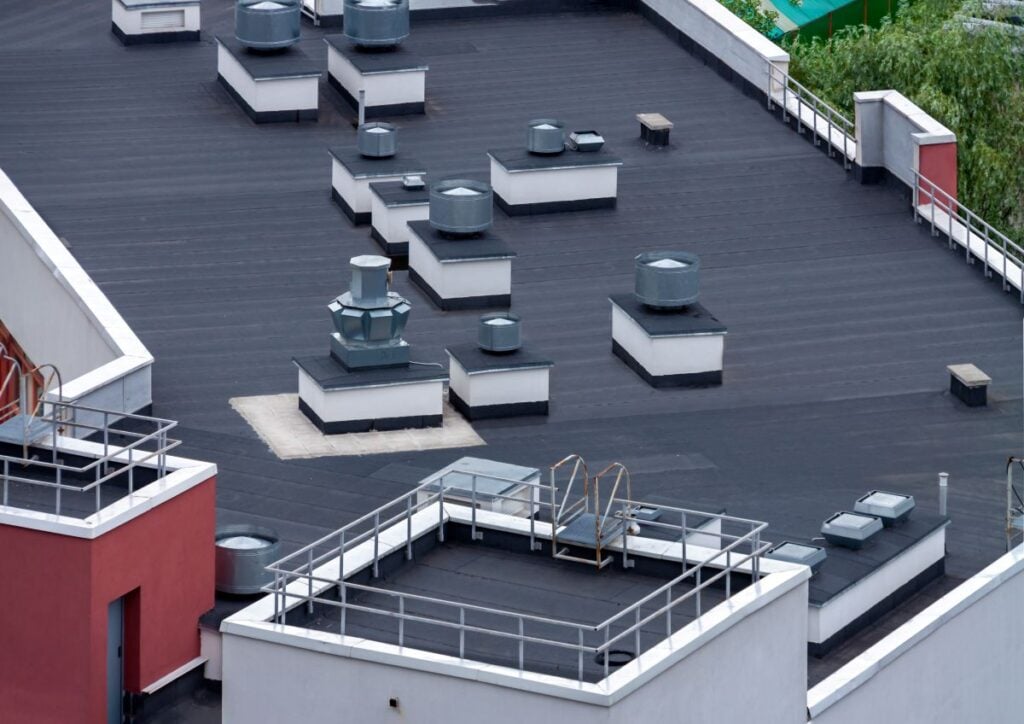
Flat roof vents are an essential part of any well-designed commercial roofing system. From pipe and stack vents to mushroom, powered, solar, and wind turbine options, each type offers its own unique benefits for moisture control, energy efficiency, and roof lifespan. The right ventilation paired with the right contractor delivers years of strong performance and lasting value for any commercial building.
At Classic Construction, we specialize in commercial flat roofing systems, replacements, and repairs across Minnesota and Wisconsin, including complete roof assemblies designed with proper ventilation in mind. Our team brings deep experience with every major commercial roofing system, expert craftsmanship, and a proactive approach that protects your investment for the long term. If you are planning a commercial roofing project and want to maximize roof performance through smart ventilation, contact Classic Construction today to schedule a free roof inspection and get a clear plan for your building.


