

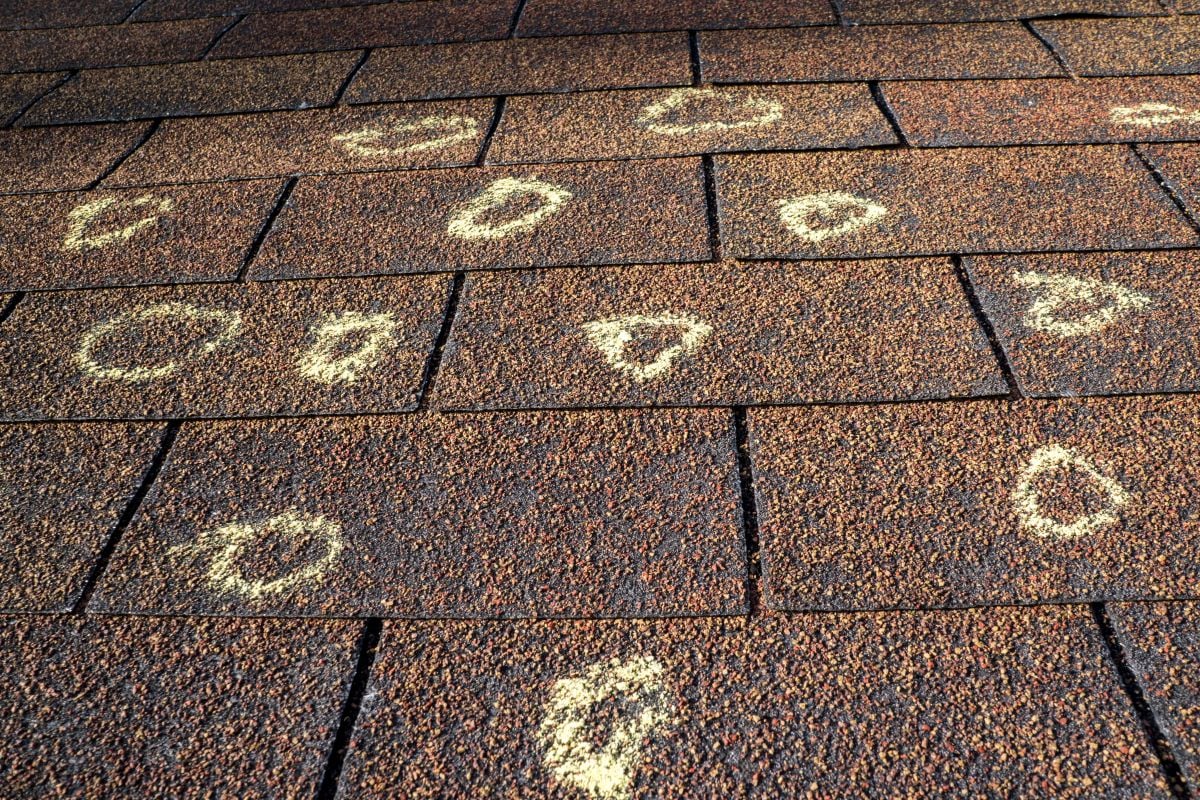
One hailstorm can leave a roof looking fine from the street while hiding serious damage underneath. Understanding hail damage roof repair and how insurance claims work helps homeowners avoid paying out of pocket for damage that should be covered by their insurance company. Knowing what to look for, and pairing that knowledge with a team that specializes in upscale homes, makes the entire claims process far less stressful when a storm does hit.
What this guide walks through:
- Why hail damage deserves prompt attention after any storm
- Five signs of hail damage worth documenting right away
- How to strengthen an insurance claim before filing
- DIY inspection versus a professional damage assessment
- Answers to common questions about hail damage claims
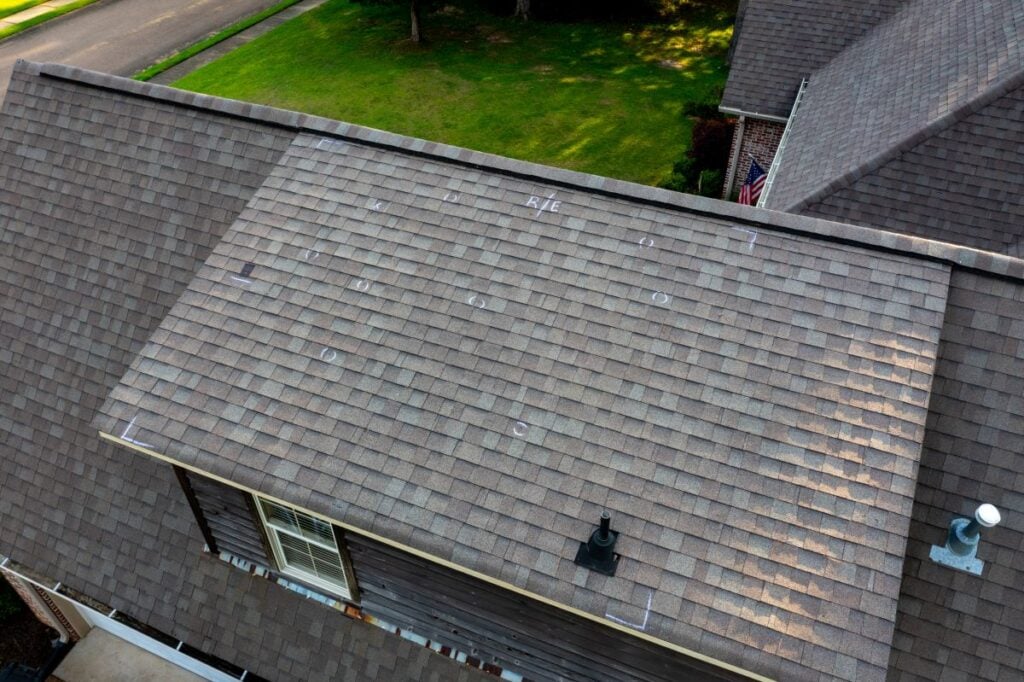
Why Hail Damage Repair Matters
Hail damage is often invisible from the ground, which means many homeowners underestimate how much a storm actually affected their roof. Left unaddressed, even minor hail impacts can compromise a shingle’s protective layer, leading to leaks and interior damage months after the storm has passed. Homeowners across Rochester and surrounding areas deal with severe spring and summer storms that can produce hail capable of causing real structural harm in a matter of minutes, and the compressed timeline for filing a claim only adds to the pressure.
- Prevents hidden leaks: Damaged shingles may not leak immediately but often fail within a year or two, sometimes leading to mold growth inside the attic.
- Protects your insurance claim: Insurers typically require damage to be reported within a specific window after a storm.
- Preserves roof lifespan: Addressing hail damage promptly prevents further deterioration and structural problems from sun and moisture exposure.
- Avoids costly delays: Waiting too long to file a claim can result in denied coverage, reduced payouts, or higher insurance premiums down the road.
Recognizing hail damage quickly puts homeowners in the strongest possible position, both for repairs and for the insurance process that often follows. The signs below help you know exactly what to look for.
5 Signs of Hail Damage to Document
Not all hail damage looks the same, and some signs are far easier to spot than others. The following five indicators represent the most common evidence adjusters and roofing professionals look for when assessing storm damage.
1. Bruising or Soft Spots on Shingles
Hail impacts often leave circular bruises on asphalt shingles that feel soft or spongy when pressed, even if the shingle surface looks intact. Even 1-inch hail can bruise shingles and crack granule coatings, which weakens the shingle’s structure without always breaking through immediately, exactly why it goes unnoticed for so long.
- Press gently on suspected impact areas to check for sponginess
- Look for dark circular marks scattered across the roof surface
2. Granule Loss Around Impact Points
Hail strikes knock protective granules loose, exposing the asphalt layer beneath. This exposed asphalt breaks down faster under UV rays, shortening the shingle’s remaining lifespan significantly and making the roof more vulnerable to future storms.
- Check gutters and downspouts for unusually heavy granule buildup after a storm
- Look for shiny or discolored patches where granules have been knocked away
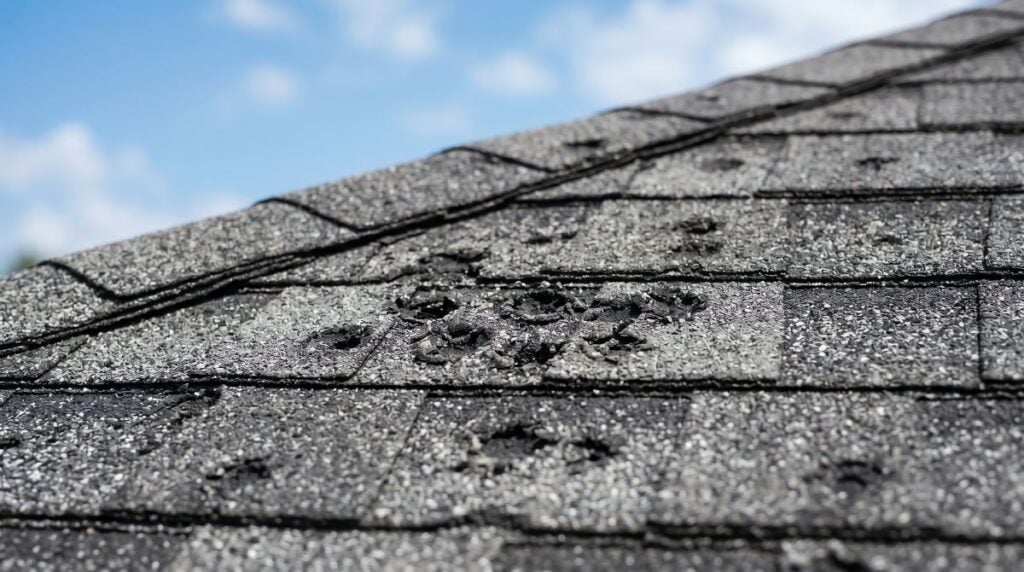
3. Cracked or Split Shingles
Larger hail can crack shingles outright or knock them loose entirely, creating a direct path for water to reach the roof deck. These cracks and missing shingles are sometimes visible from the ground but often require a closer inspection to confirm, especially on an old roof where wear is already present.
- Inspect for straight or jagged cracks running across shingle tabs
- Note any shingles that appear split near the edges or corners
4. Damaged Flashing and Vents
Metal components like flashing, chimney caps, vent covers, and gutters often show dents from the same hail that damages shingles. Dents in metal flashing can create water collection points that lead to leaks over time, and dented gutters serve as a useful visual reference for adjusters evaluating the storm’s overall impact.
- Check chimney flashing, chimney caps, and vent covers for visible dents
- Compare gutter dents to shingle damage as supporting evidence
5. Bruised or Dented Soft Metals
Softer metals like aluminum siding, downspouts, and window screens dent more easily than shingles, making them a useful early indicator of hail size and the combined force of hail and wind during a storm. If these areas show damage, the roof likely does too.
- Inspect downspouts and siding for consistent dent patterns
- Compare dent size and spacing to estimate hailstone size
Documenting each of these signs thoroughly gives you much stronger insurance documentation when it comes time to work with an adjuster. Photos taken immediately after a storm are especially valuable, since some damage becomes harder to see as time passes, and a written report from a roofing professional adds further weight to your case.
How To Strengthen Your Insurance Claim
Beyond identifying the damage itself, a few additional steps can significantly improve how smoothly an insurance claim moves forward. These extra efforts often make the difference between a fair settlement and a frustrating back and forth with an adjuster, especially on claims involving widespread storm damage across a neighborhood.
- Document everything with photos and video. Wide shots of the entire roof paired with close ups of specific damage give adjusters a complete picture to work from.
- Get a professional inspection quickly. A roofing contractor can identify damage that might be missed during a homeowner’s initial walkthrough, strengthening the claim before an adjuster arrives.
- Choose a local roofer over storm chasers. Avoid aggressive storm chasers who show up uninvited after a storm, and instead work with an established local roofer who offers a free inspection and just an honest assessment with zero obligation.
- Keep a written record of the storm. Noting the date, time, and reported hail size from local weather services helps confirm that damage aligns with a specific storm event.
- Avoid rushing into repairs before documentation. Fixing damage before it has been properly documented can complicate the claims process and potentially reduce your payout, though a reputable contractor can still offer emergency tarping to prevent further water damage in the meantime.
Homeowners throughout Rochester and surrounding areas who follow these steps tend to experience smoother, faster claims with fewer disputes over coverage. Taking a methodical approach protects both your timeline and your final settlement amount.
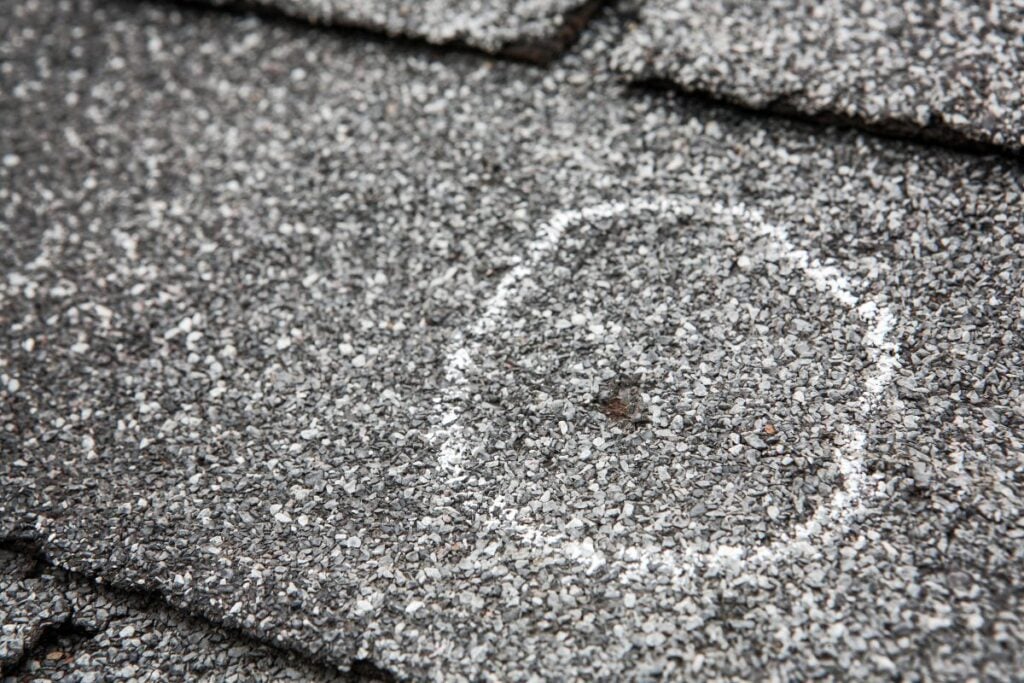
DIY Inspection vs Professional Inspection
Deciding whether to inspect hail damage yourself or bring in a professional right away depends on the severity of the storm and your comfort with rooftop access. Both approaches play a role, and many homeowners end up using a combination of the two depending on how the claims process unfolds.
| Factor | DIY Inspection | Professional Assessment |
| Safety | Limited to ground level viewing | Includes safe rooftop access |
| Documentation quality | Basic photos and notes | Detailed reports adjusters recognize |
| Accuracy | May miss subtle or hidden damage | Trained to identify all damage types |
| Insurance leverage | Useful as a starting point | Often strengthens claim outcomes |
| Best used for | Initial assessment right after a storm | Confirming damage before filing a claim |
Neither approach fully replaces the other, since a homeowner’s early observations combined with a thorough professional assessment tend to produce the most complete picture. Choosing to involve a professional early rather than waiting often results in a faster, more accurate claims process overall.
Frequently Asked Questions About Hail Damage Roof Repair
Homeowners dealing with storm damage often have similar questions when navigating the repair and claims process. Here are answers to some of the most common ones.
How soon after a storm should I inspect my roof?
It is best to inspect for visible damage within a few days of the storm, though a full professional assessment can follow shortly after if access is limited.
Does homeowner’s insurance typically cover hail damage?
Most standard policies cover hail damage, though coverage details, deductibles, and time limits for filing vary by provider and policy.
What if the adjuster says there is no damage?
Homeowners can request a second inspection or bring in an independent roofing professional to provide additional documentation supporting the claim.
How long do I have to file a hail damage claim?
Filing windows vary by insurer and state, but many policies require claims to be reported within one year of the storm, so acting promptly matters.
Will my insurance rates increase after filing a hail claim?
Rate impacts vary by insurer and are often less significant for weather related claims compared to claims involving negligence, though it depends on your specific policy.
Should I get multiple repair estimates before filing a claim?
It can be helpful to have at least one detailed estimate from a trusted roofing contractor before speaking with your adjuster, since it gives you a realistic baseline for comparing the settlement offer.
How much does hail damage roof repair typically cost?
Costs vary by damage extent and roof size, but most homeowners insurance policies cover repair costs minus the deductible, which typically ranges from $1,000 to $2,500 for hail damage.
Are impact-resistant shingles worth the extra cost?
Class 4 impact-resistant shingles can withstand large hail without damage and typically cost 10 to 20 percent more than standard shingles, though many insurance providers offer discounts on premiums for choosing these impact resistant roofing materials.
What does the actual repair process usually involve?
Repairing a roof after a hail storm requires a systematic approach to ensure safety and lasting structural integrity, and reputable contractors use rolling magnets afterward to clear stray nails from the property. Final inspections confirm that repairs are complete and seals are secure to prevent leaks before the final paperwork is signed off.
If you are unsure whether your roof qualifies for a claim, a professional inspection is the most reliable way to find out.
Protect Your Roof and Your Claim
Hail damage roof repair is most successful when homeowners act quickly, document thoroughly, and involve professionals early in the process. Some damage is immediately visible, while other minor damage takes longer to surface, but waiting too long or skipping documentation can turn a straightforward claim into a frustrating dispute that costs both time and money.
Classic Construction has helped homeowners across Rochester and surrounding areas navigate hail damage repairs and insurance claims with confidence, combining thorough inspections with documentation adjusters trust. Whether you suspect recent storm damage, notice damage after a recent hailstorm, or need anything from necessary repairs to a complete roof replacement, having an experienced team on your side makes the process far smoother from start to finish.
If a recent storm has you wondering about the condition of your roof, contact us today to schedule a professional hail damage inspection.


